


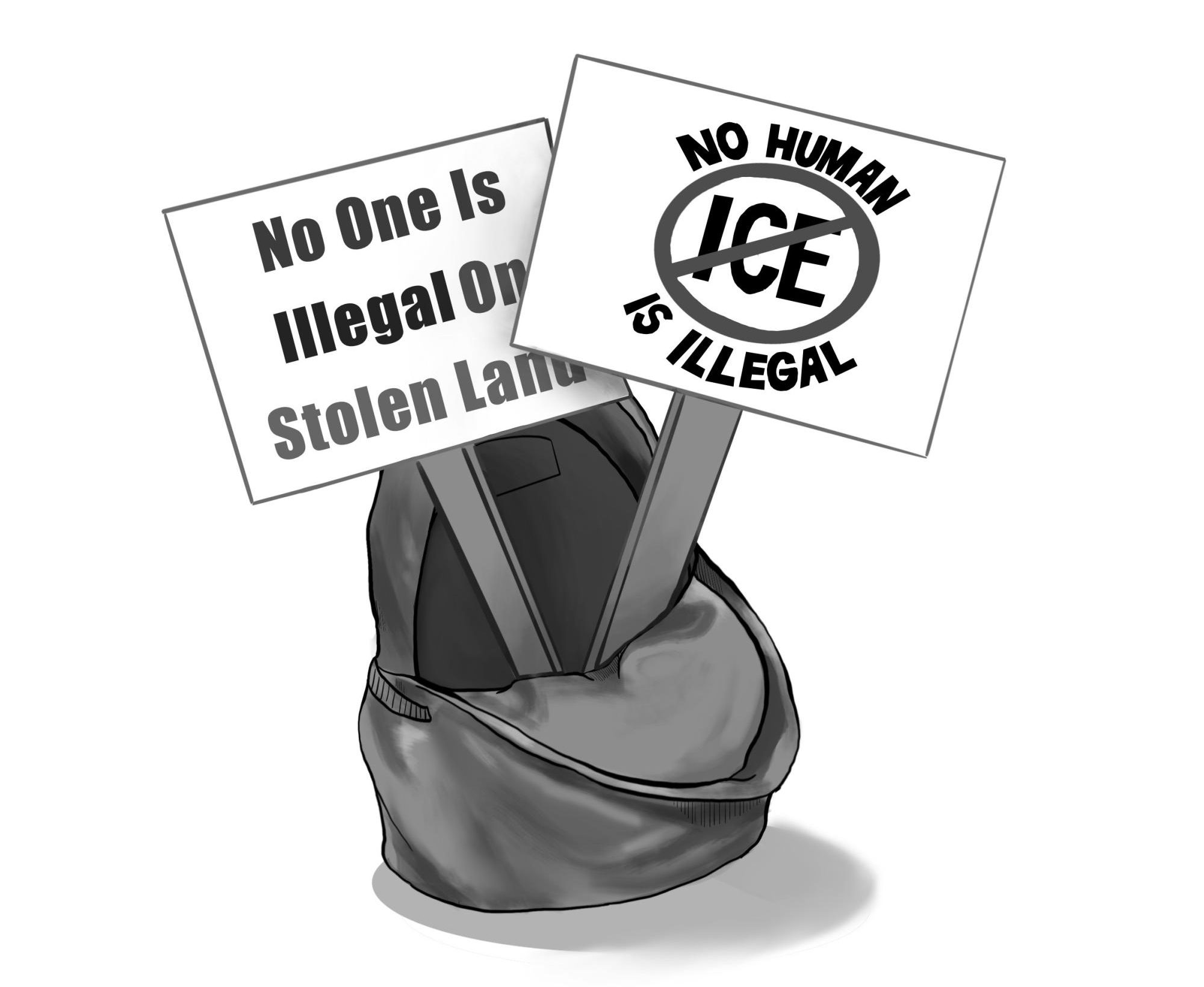
From Chicago to Minneapolis to right here in Orange County, student-led protests against Immigration and Customs Enforcement (ICE) policies and recent incidents of violence have become an increasingly common sight.
For a generation dubbed the least politically engaged, the tens of thousands of Gen Z students that have already walked out of classrooms have proven that teens are, in fact, proactive, involved, and engaged in the issues that most impact their lives.
The kids, as they say, are all right.
But, despite sizable turnout at high school campuses across the US, from The Masters School in New York, to Archie Williams High School in San Anselmo, to our neighbors at La Habra’s Sonora High School, some students, including those at BOHS, question the walkouts’ impact, asking whether participation in protests has any real and lasting impact (and if their peers are just looking for an excuse to skip class).
But those questions miss the point.
The First Amendment guarantees the freedom of speech, freedom of assembly, and the right to petition the government for all Americans. These rights don’t just apply to politicians, journalists, adults, and people in power — they belong to students as well. These principles aren’t abstract ideas tucked away in an AP US History textbook; they are foundational rights in the US Constitution, designed to protect those Americans who are leading anti-ICE protests, and thus, shaping our futures.
And as evidenced by the many Instagram accounts created to plan and promote anti-ICE walkouts, young people are once again getting involved and participating in our democracy.
Historically, organized marches have served as catalysts for change, and teens have been right there in the throng, from participating in the Civil Rights movement, to anti-war demonstrations, to climate strikes, to marches to end gun violence. Teens have consistently and reliably pushed conversations forward when adults have failed to act quickly enough.
These protests didn’t begin because students are bored or because they wanted to skip a few periods of school; they began because students care, because they want to be engaged and to make a difference in the world they’re coming-of-age in.
Locally, on Jan. 30, students at Irvine’s Northwood High School and other campuses throughout Orange County walked out of their classrooms in protest of ICE policies. Students risked consequences to exercise their right to protest in a stand against ICE.
Using our voices comes with great responsibility. Protest is most powerful when it’s informed, peaceful, and purposeful. Exercising our rights means understanding them, respecting others, and being prepared to explain why we believe what we believe.
BOHS prioritizes preparing its students for the “real world,” for life after high school. And in the real world, as we’ve seen countless times in the past few years — March For Our Lives in 2018, the Black Lives Matter protests in 2020, last summer’s immigration protests in Los Angeles — people, teens included, advocate for themselves and for others.
We speak up when we witness injustice in our communities.
We organize.
We march.
We rally.
And soon, we’ll vote.
Silence is easy, but participation, however, is hard. It takes confidence to stand up and very publicly announce what matters to us. But that’s exactly what makes student voices so powerful. When young people engage, we challenge the idea that politics is something we’re supposed to wait “our turn” to care about.
No matter which end of the political spectrum BOHS students land on, it’s imperative that they feel empowered to use their voice. The First Amendment, after all, does not work if we don’t use it.
And neither does democracy.
Majela Walker • Feb 6, 2026 at 6:37 am
Well done!!!Power to our youth, our future.