

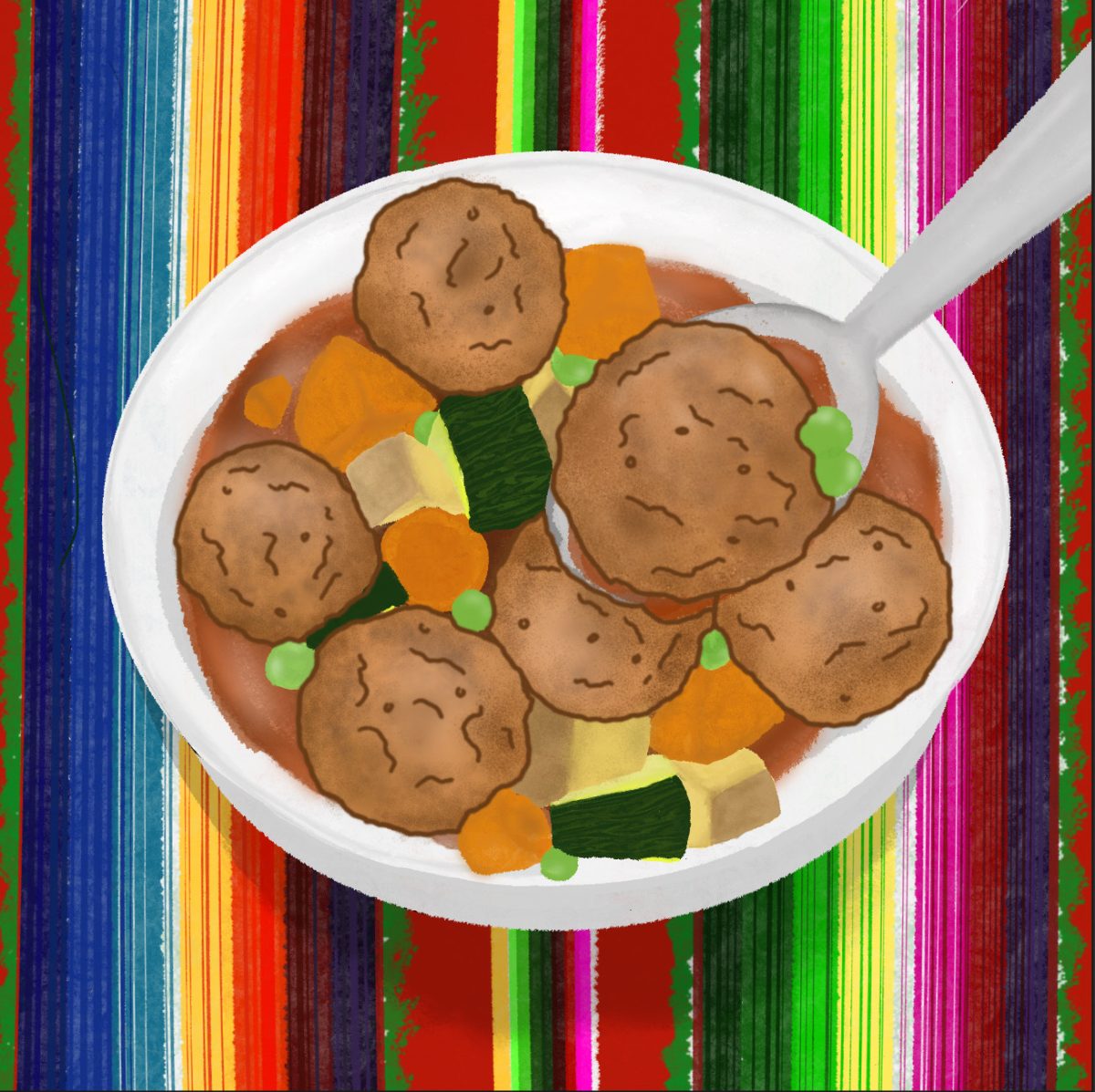
At the end of each year, when the weather turns cold and evening comes early, albondigas soup returns to the dinner table. It’s my family’s version of Winter Solstice, the season marked by warm bowls of Mexican soup sitting atop each family member’s mat.
I have smudged memories spanning my childhood of being served this steamy bowl of broth studded with soft veggies and albondigas, the tiny meatballs made of rolled ground beef and rice. It’s a deliciously simple, albeit highly honored, meal in my household.
Eating albondigas is a tradition for us, but it’s also a claim to my bloodline and proof that I am who my ancestors would want me to be.
The fear of losing my place in my culture is familiar. It’s hard to feel tied to my heritage because I’m a light-skinned, non-Spanish-speaking, “privileged” Mexican American. So in the face of this insecurity, I wield whatever scraps of validity I can find in my life — my parents’ childhood in the barrios of L.A., mariachi playing loudly from my mom’s phone during Sunday afternoon cleaning — to convince others (but also myself) of being absolved of “the crime” of being whitewashed.
But the only thing that can make me feel entirely authentic is Mexican food, because food is easy — you don’t have to know, to eat.
A bite into my tía’s enchiladas draws out the same feeling of connection that biting into albondigas does. I don’t understand the tongues of my abuelos, but with seasoned pork and masa, I prove that I’m a Mexican daughter in a Mexican house.
I only feel whole when consuming Hispanic dishes, and that’s how my culture creates a cycle of pushing and pulling; one minute I am in the midst of everything I want to be and the next, I’m grappling with my inadequacy, enticed back with promises of redemption through spiced dishes and blessed desserts.
I do what little I can to claw my way back to my ancestry: I watch my mom make albondigas soup, which I eat, hoping the legitimacy it provides will be enough to warm me through the unsettled seasons.
I don’t know how to be a “real” Mexican. I know I’m not considered by many to be one, so I do what I can to placate the anxieties I have in my cultural relationship.
Recently, when I watched my mom preparing dinner, I found my insecurities telling me:
I should probably help her. A good Mexican daughter would.
But instead, I sit attentively and watch my mom roll shiny and plump albondigas because this moment is something I want to hold onto and this simple comfort is something I want to be proud of. Eating the albondigas is a humble claim to the heritage that sometimes sears my tongue but always tastes sacred to me.


Jacquelyn Nethers • Dec 5, 2025 at 11:22 am
Wow, beautiful. Thanks for sharing, Sofia.