

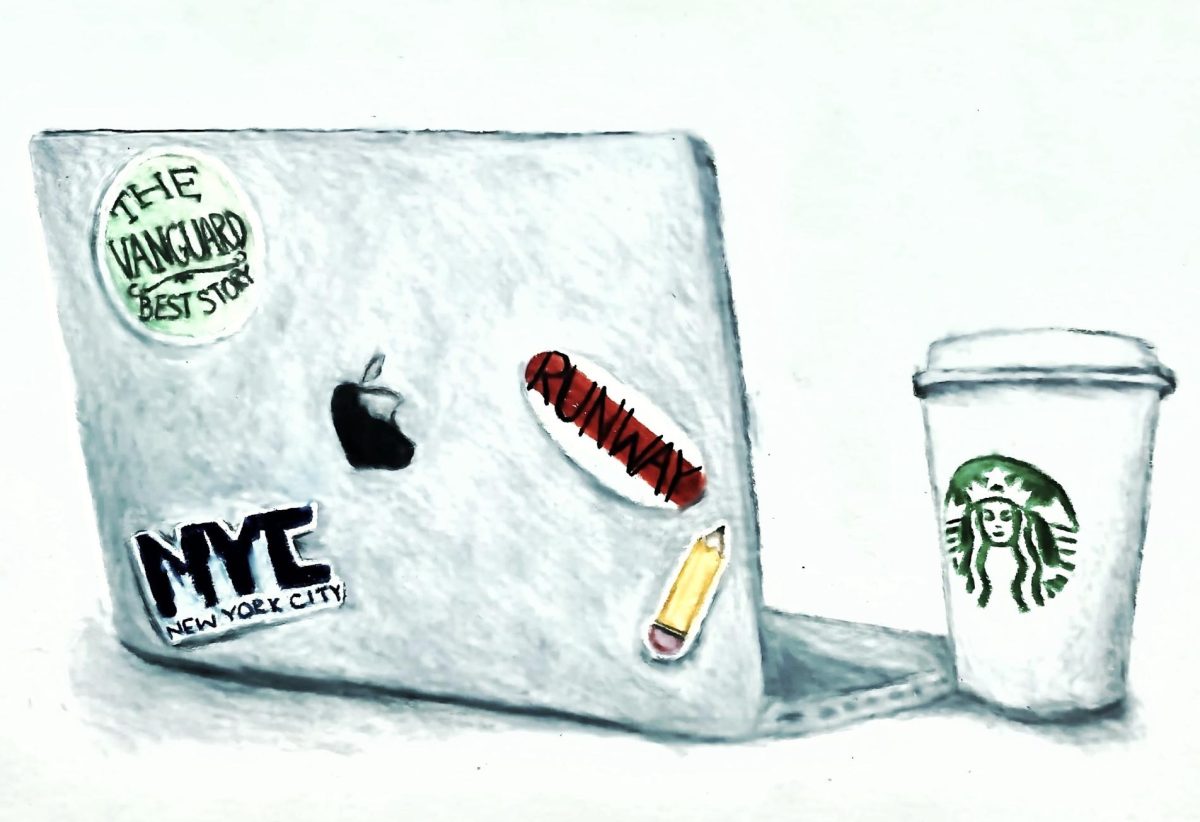
For decades, romantic comedies have portrayed journalism as a world of cutthroat editors in stilettos, scandalous exposés, and worlds in which story deadlines lead to storybook meet-cutes. The jobs of magazine writer and newspaper reporter are depicted as glamorous, lucrative, and stable.
The reality, however, is that journalism is barely surviving.
As a student journalist who aspires to work in the field, the fear of the shut down of newspapers and mass layoffs is pervasive. People will always need objectively reported news, but that need is not translating to sustainability, especially when a digital subscription to the New York Times costs less than a cup of coffee. Newsrooms today are expected to do more with less.
That fear of declining media appears on the big screen in The Devil Wears Prada 2, where even the most impressive resumé as an award-winning editor of a respectable newspaper offers little security.
But the demands (navigating irregular hours and meeting deadlines) and instability (the Washington Post laid off nearly a third of its workforce in February) that accompany journalism are rarely reflected in Hollywood rom-coms. Instead, the plots are heavy on misogyny, frivolity, and swoon-worthy love interests, not on research, interviews, and editing.
The Devil Wears Prada 2, released in theaters May 1, is refreshingly different, however. It glamorizes the journalism industry, but the actual challenges of reporting are not overshadowed by a charming womanizer (the usual rom-com trope).
In the sequel to 2006’s The Devil Wears Prada, in which aspiring journalist Andy Sachs (the always-charming Anne Hathaway), the reluctant assistant to Miranda Priestly (legend Meryl Streep), the narcissistic editor-in-chief of Runway fashion magazine, returns to Runway two decades later after being fired from her job as a reporter at The Vanguard. She’s yet another casualty of a shrinking print media. Andy is pulled back into Runway when she assumes the role of feature editor, and has to fight for Miranda’s approval all over again.
What’s striking about the film (directed with ample nostalgia for the first film by David Frankel) is how little it glamorizes Andy’s trajectory, from devoted print journalist to red carpet digital writer. The Devil Wears Prada 2 doesn’t romanticize journalism in a series of fantasies like falling in love with an article’s subject and traveling the world with a champagne glass in hand, but instead realistically illustrates that the deadline-driven, underpaid life of a pro journalist consists more of crowded press conferences and rigorous fact-checking than meet-cutes and gossip.
It’s a refreshing contrast to the journalism I grew up watching.
In Never Been Kissed (1999), Drew Barrymore plays Josie Geller, an investigative reporter who falls in love with a teacher at the school she’s covering. Journalism isn’t really about reporting in this movie — it’s a setup for romance, and an excuse for the what-were-they-thinking plot twist.
As soon as English teacher Mr. Coulson’s dreamy eyes enter the frame, Josie’s career becomes a footnote. She’s no longer the impressive and smart aspiring journalist we’re introduced to in the film’s opening scene, she’s just a 25-year old who has (kind of) never been kissed. The film’s message isn’t about a girl’s aspirational rise from copy-editor to investigative journalist, it’s that a woman’s priority is to find a man to kiss.
2003’s How to Lose a Guy in 10 Days is similarly idealistic (and misogynistic). The film’s protagonist, Andie Anderson (Kate Hudson), constantly laments the shallow topics she’s forced to write about, like “How to Get a Better Body in 5 Days,” as a lifestyle columnist of Composure magazine. Andie’s passion is foreign politics, not dating tips, yet she embarks on a 10-day undercover assignment that uses common mistakes women make in relationships to drive off a man. Instead of advancing her career by publishing the column, Andie merely reinforces the stereotype that women are clingy when she needles Ben about his past relationships and accuses him of hitting on their “shrink.” Andie’s career is, unfortunately, just a plot device to make her appear sophisticated and classy.
2004’s 13 Going on 30 similarly hides the hard work of journalists and the dignity of the profession behind rom-com gags. The storyline follows a teenage girl who wakes up one morning as a 30-year old editor of Poise magazine.
The film’s protagonist, Jenna Rink (Jennifer Garner), enjoys countless perks as a journalist, from grand galas to an expansive designer closet, depicting the industry as high-paying and glamorous. (In 2026, the average salary of a reporter is $54,000). But Jenna spends more time pursuing her childhood best friend (and being terrible, in general) than writing and editing at Poise magazine.
I don’t expect 13 Going on 30 and How to Lose a Guy in 10 Days to fully delve into the systemic sexism of the journalism industry or even get the field exactly right (they’re not documentaries or Oscar award-winning dramas, after all), but I do expect movies to at least respect the Fourth Estate. Just because these films are labeled as “romantic comedies” doesn’t mean that reporters, man or woman, should be portrayed as manipulative, shallow, and just plain stupid.
Wacky premises and caricature-like protagonists are entertaining, but when it becomes the norm, a harmful stereotype emerges, reinforcing a woman’s inferiority in a male-dominated career. 60 percent of journalists who cover government and politics are men, for instance.
The journalism industry has been reformed by countless courageous women – Ida B. Wells, Connie Chung, and Maggie Haberman, for example – and The Devil Wears Prada 2, refreshingly, finally reflects that, turning the man-crazy magazine writer trope on its head.
Andy herself embodies that shift: At 43, single, and without children, she has sacrificed everything for her career. She isn’t framed as incomplete, nor is the film centered around a love story. Sure, there is a random subplot about a romance with an Australian luxury apartment contractor thrown in for drama (the movie has to sell tickets, after all), but it barely registers. The Devil Wears Prada 2’s true focus is Andy’s work as feature editor — its demands (like securing an interview with a billionaire recluse) and value (reforming Runway from click-bait to an informative, reputable source).
That focus on career feels radical. In an era full of superhero movies and low-budget, straight-to-Netflix rom-coms, it’s rare these days to find an entertaining film that revolves around professional identity, especially a woman’s.
In the original The Devil Wears Prada, Andy was fighting a toxic work environment, but in the sequel, she now confronts something more daunting: She’s fighting to keep the industry she’s sacrificed everything for from dying.





Beth Hambelton • Jun 2, 2026 at 8:32 pm
Excellent article Charlotte! Well written, thoughtful and bold. Keep up the great work!