


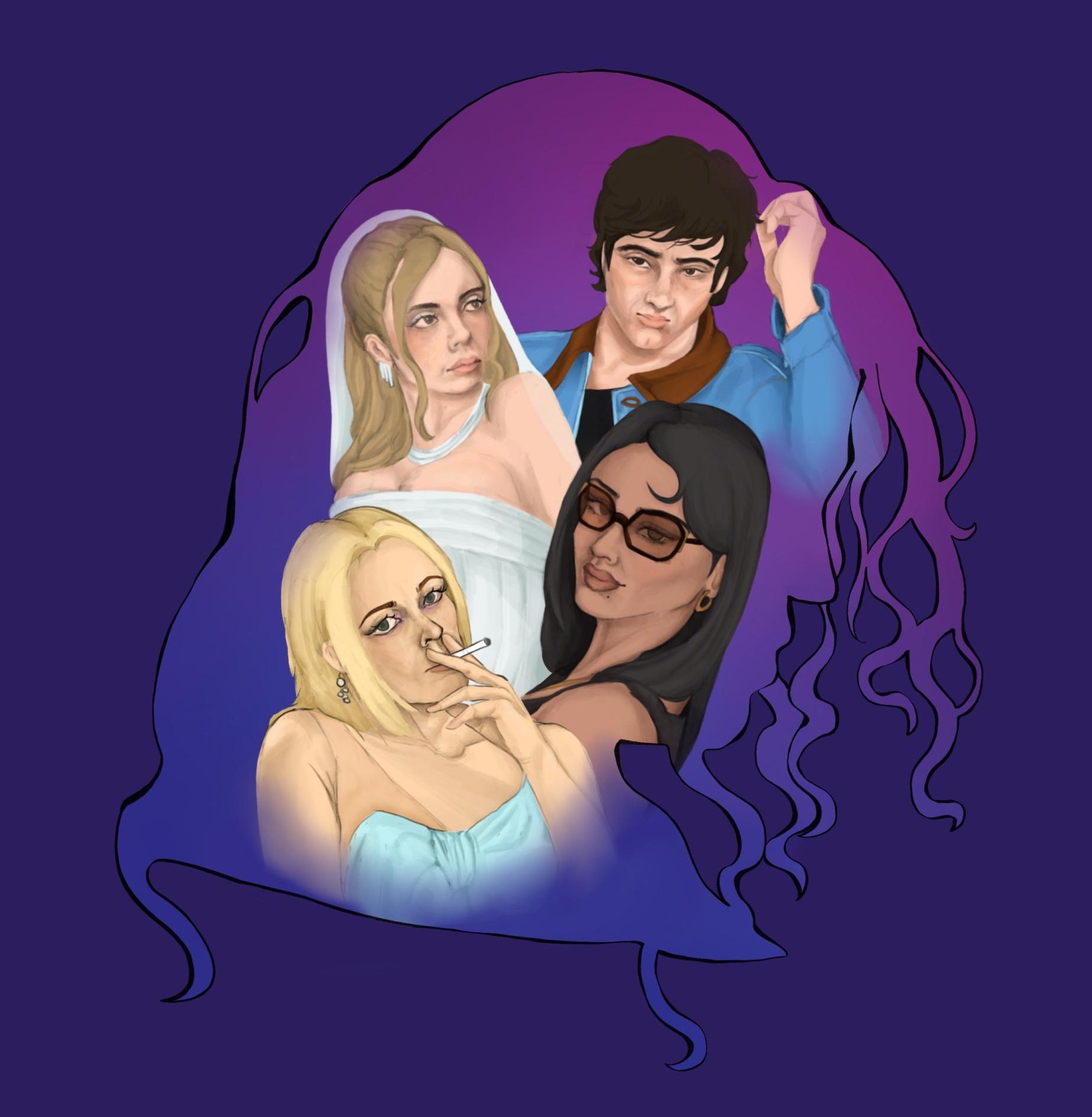
Six episodes into its third season, HBO’s Euphoria is experiencing an identity crisis, seemingly propelled by its own fame, by its need to be EUPHORIA, rather than character-first storytelling that had actual emotional heft in Seasons 1 and 2.
Euphoria, which premiered in 2019, centers on a group of teens whose lives become increasingly tangled through addiction, violence, and toxic relationships. The show’s neon-tinged visuals, signature glittery makeup, and dream-like cinematography worked because there was always something human in the foreground — Rue’s tear-streaked face during her withdrawals from oxycontin and street drugs — helped ground the more stylized scenes.
Even Season 2, which shifts wildly between character-driven plots and anxiety-inducing melodrama — numerous affairs, a SWAT shootout, a drug-fueled rampage — is at least somewhat tethered to reality through performances by some of the best young actors in Hollywood. As portrayed by Zendaya, Jacob Elordi, and Sydney Sweeney, Euphoria’s protagonists have a depth and range that make even the most outlandish subplot feel authentic.
Season 3, however, feels caught between what the show is (an exploration of teen mental health and trauma) and what it thinks it needs to be (glamorous, revolutionary), featuring a five-year time skip that moves the show out of Los Angeles’s suburbs to the city itself.
The most recent episode, which aired May 17, “Stand Still and See,” leans heavily into biblical imagery and surreal metaphors, like Rue’s vision of a burning bush, repeated references to salvation and forgiveness, and Alamo’s snake story. But much of these metaphors feel frustratingly self-important. It’s yet another example of the show’s creator and writer, Sam Levinson, mistaking symbolism for substance.
In the May 10 episode, “This Little Piggy,” Levinson has Cassie (played by an in-on-the-joke Sydney Sweeney) stomp through a miniature Los Angeles like a glitter-covered Godzilla; Rue buried neck-deep in dirt; and an unnecessarily gory scene of Nate Jacobs (Jacob Elordi, Oscar nominee) losing his toe. Godzilla-Cassie symbolizing her destruction of her interpersonal relationships in her pursuit of fame is Levinson getting in his own way, writing scenes with viral potential at the expense of purposeful, reality-grounded storytelling.
To the show’s credit, the shock sometimes works. “This Little Piggy” is a captivating episode of TV, largely driven by the episode’s high-stakes tension as Rue’s entanglement with Alamo escalates. The sequence culminates with a visual of Rue neck-deep in dirt, bracing as Alamo charges at her on horseback.
But that success comes with a larger problem looming over its current season: Euphoria is so focused on outdoing itself — on being talked about — that it transforms what should be the very human emotions of Sweeney’s Cassie Howard as she battles her fractured identity and need for external validation into self-parody and social media-ready memes.
Earlier seasons shocked audiences because they confronted real issues head-on. Season 3, however, shocks us with grotesqueries, gore, and excess.
For viewers that have followed since the show’s release, it’s disappointing to see characters we’ve grown up alongside turn into caricatures. In previous seasons, we could relate to Jules’s struggle with body image and Nate’s contentious relationship with his dad. Now, it’s much harder to relate when it seems that every character lives in a mansion in the Hollywood Hills or is deeply entwined in exploitative sex work and the drug trade.
Still, there are flashes of what made the series resonate in the first place in the overly-campy scenes of Hollywood and Mexico. A quiet moment with Rue sitting quietly in the car says more about grief and exhaustion than entire episodes filled with visual chaos. In these smaller moments, the show reminds us that an emotional core is still there, it’s just increasingly buried under its ambition to be Tweeted about.
That tension has come to define Season 3. Earlier seasons used excess to expose something raw about identity (Cassie’s infamous 3 a.m. morning routine as a way to get Nate’s attention), addiction (Rue’s angry rampage while going through withdrawals), and self-destruction (Jules slashing her arm at a party in a display of self-harm driven by trauma and fear). Now, the excess feels, well, excessive. The extremes are no longer tied to anything meaningful, and the show feels, overall, like an exaggerated version of what Sam Levinson thinks the viewers want: more spectacle, more chaos, more Sydney Sweeney.
Episode 2, “America My Dream,” highlights those disconnects — Maddy’s Hollywood hustle, Cassie’s OnlyFans, and Rue in a strip-club drug escapade unfold with little narrative cohesion. In earlier seasons, shared spaces — parties, classrooms, hallways — used to bring characters together.
Season 3 is clearly capable of change — the question is whether or not it will. If the second half can reconnect its spectacle to character, especially by re-centering Zendaya, Rue, the chaos could still become meaningful. If not, the show will keep getting bigger and louder without saying much at all.