

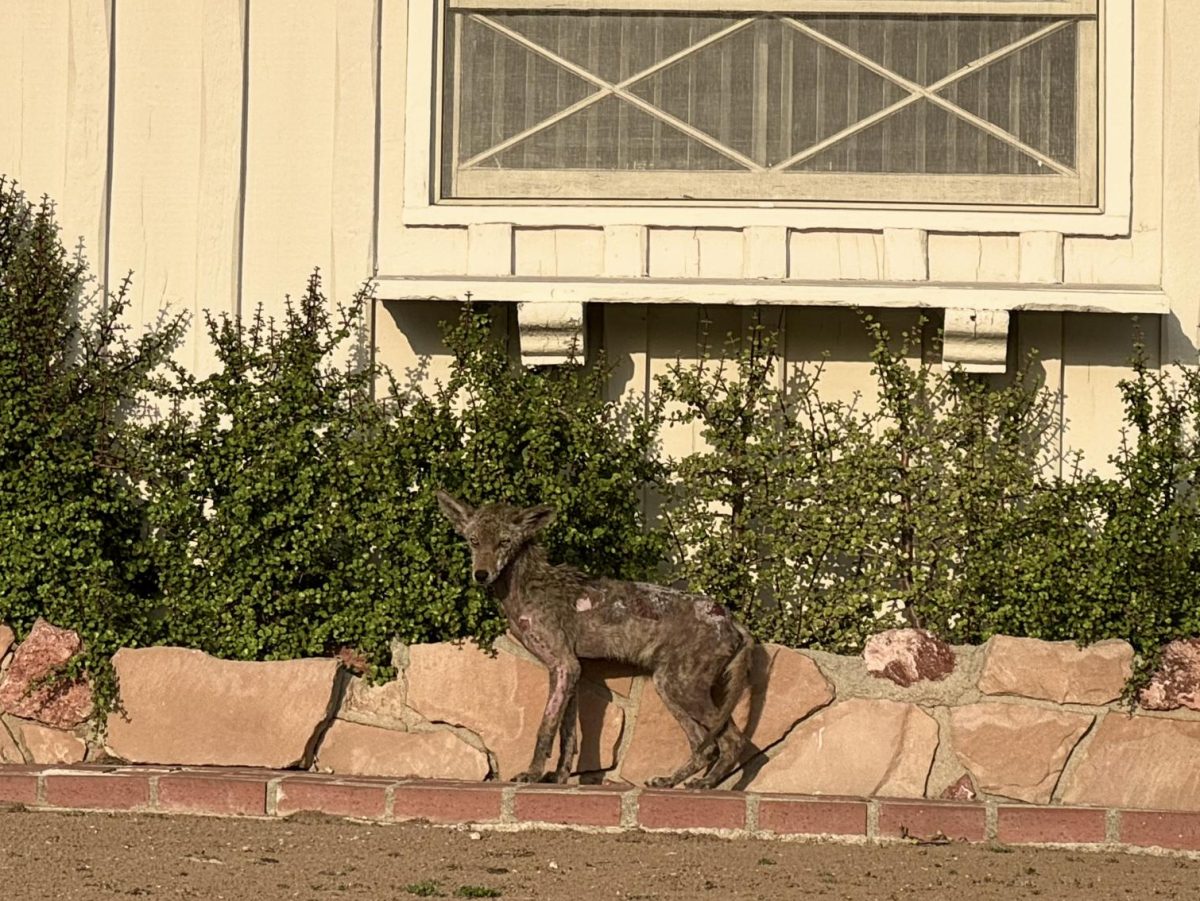
A Ring notification appeared.
When the homeowner on Wardman Drive in Brea opened the app on their phone, an unexpected visitor appeared on the screen: a small coyote perched on the front porch.
This scene — and many others, like coyotes sauntering through neighborhoods, crossing busy streets, and resting on front lawns — has become an increasingly common sight in Brea.
“I saw three coyotes in separate locations on one 2.5 mile run one day,” Pam Valenti, Activities Director, said.
Pleasant Hills resident Tristyn Ingallinera has also noticed an increase in the animal, which is native to the state. “Coyotes that were once mostly seen early in the morning are now visible all throughout the day and evening,” Ingallinera said.
This uptick in coyote encounters in residential areas is a result of several factors, including habitat loss due to development and changing environmental conditions.
The Coyote Creek watershed, which begins near Brea Canyon and includes tributaries like Brea and Carbon Creeks, has been a long-time home for coyotes. Before development, the area consisted of canyons and open spaces that supported wildlife such as coyotes, mule deer, bobcats, and red-tailed hawks. As housing and road expansion encroached on these spaces, coyotes, which are highly adaptable, migrated into open land-adjacent neighborhoods like Pleasant Hills and North Hills.
“There used to be a lot more open space, but now with more housing, we’re seeing them more often,” La Habra Animal Control Officer Kristy Hernandez said.
In Brea, that growth is reflected in ongoing residential development due to the city’s growing population, which rose from 35,000 residents in 2000, to 47,000 in 2024, a 34% increase. And the city is still growing, with the development of more than 2,000 additional housing units by 2029 with large projects like the Brea 265 Specific Plan, which will convert hundreds of acres of open land into residential neighborhoods.
Increased encounters are also tied to changing environmental conditions. Drought limits access to natural food and water sources so coyotes are forced to adapt by moving into neighborhoods to search for food and water.
“Sightings during the day were rare but have become more noticeable over time,” 25-year Brea resident Fred Brooking said. But Brooking sees an upside to their presence: coyotes help control rodent populations. Coyotes prey on rodents such as mice, rats, and ground squirrels, keeping those populations in check and reducing the need for other pest control methods.
Wildlife living so close to neighborhoods presents problems, however, for both residents and coyotes.
In September, a female coyote gave birth to five pups across the street from the home where the Ring camera footage was captured. By mid-November, she was dead, run over by a vehicle. The pups began appearing in yards and along streets in poor health, drawing attention from residents and raising concerns about safety and animal welfare.
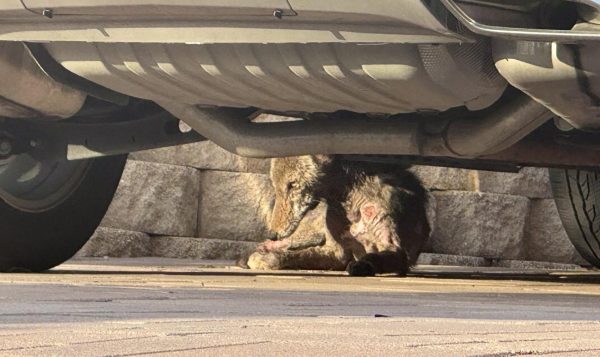
Three of the pups from the original litter were captured by Orange County Animal Control. The two remaining pups looked “miserable,” according to North Hills resident Kelly Morrill, who described the coyotes as suffering from severe mange, a parasitic skin condition.
“It’s disheartening to see the condition they’re in,” Emily Flesher, 26-year Brea resident, said. “I feel bad for them and worry they won’t survive.”
Catching and relocating coyotes isn’t a straight-forward endeavor, however.
According to Hernandez, while calls for removal have increased, animal control only steps in to intervene when coyotes are injured or unable to survive on their own since healthy animals are difficult to trap. “We look to see if the animal is healthy or sick to determine whether it is a true threat,” Hernandez said. Healthy animals typically avoid humans, while sick or injured animals may behave differently and require intervention.
Canus Latrans is enough of a priority for the city that it’s developed a 20-page “Coyote Management Plan,” which includes guidelines for monitoring local coyote activity, educating the community, ensuring the safety of both animal and residents, interventions, and reporting protocols — submitting an encounter online or calling (714) 935-6848 in the daytime, or (714) 259-1122 in the evening “if one is experiencing an aggressive or injured coyote.”
Living in Brea means living near hills, trails, and large open spaces. Wildlife isn’t separate from our neighborhoods, it’s a part of its diverse and ever-evolving ecosystem.












Jacquelyn Nethers • May 15, 2026 at 9:40 am
Great article, Zoey! Such a good angle!!