

When Max, Dustin, Lucas, Will, and Mike placed their Dungeons & Dragons folders back on the shelf and the next generation of demon hunters — Mike’s little sister, Holly, and her friends — took their seats around the game board, the TV screen fading to black for the very last time, I struggled to accept the end of Stranger Things’ ten year odyssey.
But as our childhoods come to a close, so too do the culturally significant icons that define generations. Stranger Things was one of these cultural touchstones.
Across five seasons, Stranger Things amassed over 1.2 billion views on Netflix and became the platform’s most-watched show. The final season alone has generated more than 105 million views since its first “volume” dropped on Nov. 26, 2025.
Set in the quaint fictional town of Hawkins, Indiana, the series follows three fantasy-obsessed adolescents who befriend a traumatized psychokinetic lab escapee, Eleven (played by Millie Bobby Brown). Together, they investigate disappearances, fend off demogorgons from the Upside Down, and ultimately save the world (five times), while also falling in love and making unlikely friendships along the way.
As the Hawkins’ gang grew up on screen, from preteens to high school seniors, so did the audience, making the series’ final season as much about defeating monsters as about growing up.
And that is why Season 5 works. It’s more than just a fitting finale: It refuses to be yet another futile and seemingly endless continuation to a once-beloved masterpiece like Lost and Grey’s Anatomy, and instead reminds us that the Duffer Brother’s show is not just an entertaining television series, but a piece of our youth.
Teens are so used to being underestimated and talked down to that the show’s nerdy heroes running intellectual circles around narrow-minded adults feels empowering. The final season, which concluded Dec. 31, continued the underdog narrative, especially through protagonist Dustin (Gaten Matarazzo) and his refusal to condemn the Hellfire Club (the D&D club at Hawkins High), a loyalty that leads to a barrage of punches to his face. By portraying so-called “freaks” – in the show, the D&D enthusiasts – as the town’s unlikely saviors, Stranger Things sends a message its teenage audience desperately needs to hear: It’s okay to be different.
As the show’s characters grew more confident, the show itself learned to hold back. In earlier seasons, it leaned into shock value (watching a slow death through dismemberment and broken bones – R.I.P. Chrissy – was disgusting and excessive), but matured into a high-stakes, yet also surprisingly sentimental, battle against Vecna, the root- and vine-laden antagonist. The final season prioritizes character arcs and emotional payoff over gore and jump scares.
But although less gruesome, the threats feel even deadlier because the characters, and the audience, have matured. By season five, viewers know Vecna, the Mind Flayer, and the demogorgons have been reserved a spot in the graveyard. Their defeat is a sure-thing, so the suspense — and the reward — lies in what comes after.
And by season five, viewers are emotionally attached to Eleven, Mike (Finn Wolfhard), and the rest of the waffle-loving team. These kids have a life to live, and although it’s entertaining watching Nancy and Jonathan confess their pent-up feelings as they almost drown in goo, it’s time for the creepy critters to go back to their own dilapidated dimension (and for us to return home with Max, Dustin, Lucas, Will, and Mike).
In earlier seasons, we scrambled to piece together the mysteries alongside the characters, but by season five, we’re in on the joke. At watch parties, we collectively rolled our eyes at the police blaming an earthquake for the Upside Down’s merger with reality, and cheered when Mr. Clarke, Hawkins Middle School’s science teacher, is finally let in on the town’s secret (albeit four seasons too late).
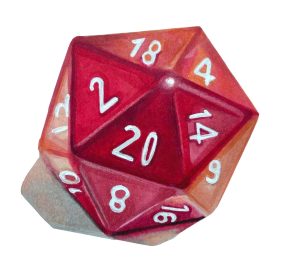
The series finale, “The Rightside Up,” is a near-perfect culmination to the series. For ten years, we’ve shrieked in terror at the jump-scare deaths from Season 1; laughed at Steve “The Hair” Harrington’s one-liners in Season 3; and ugly cried during the final roll of the 20-sided die. The ending brought sentimental closure to a decades-worth of stories (42 episodes to be exact), but it is Eleven’s unresolved future that ultimately defines the closure Stranger Things’ final season.
Although Eleven’s fate frustrated some viewers, she didn’t need a definitive resolution. After a lifetime of being experimented on and psychologically tortured, what she wanted most was freedom. The ambiguity of her final chapter allows us to write her next chapter.
Stranger Things blended genres, from horror to sci-fi to nostalgia for the ’80s, but the focus seemed to shift with each season. The final season, however, combines all three but with one prevailing theme: the end of the beginning.
It’s no wonder the series has remained a cultural phenomenon for over a decade. We’ve been making memories with our own friends along the way: Stranger Things-themed sleepovers; the jabs at Eleven’s melodrama (“Papa, you lie!”); and shared tears over the characters’ graduation from Hawkins High in the finale. Stranger Things has been synonymous with our own coming-of-age.
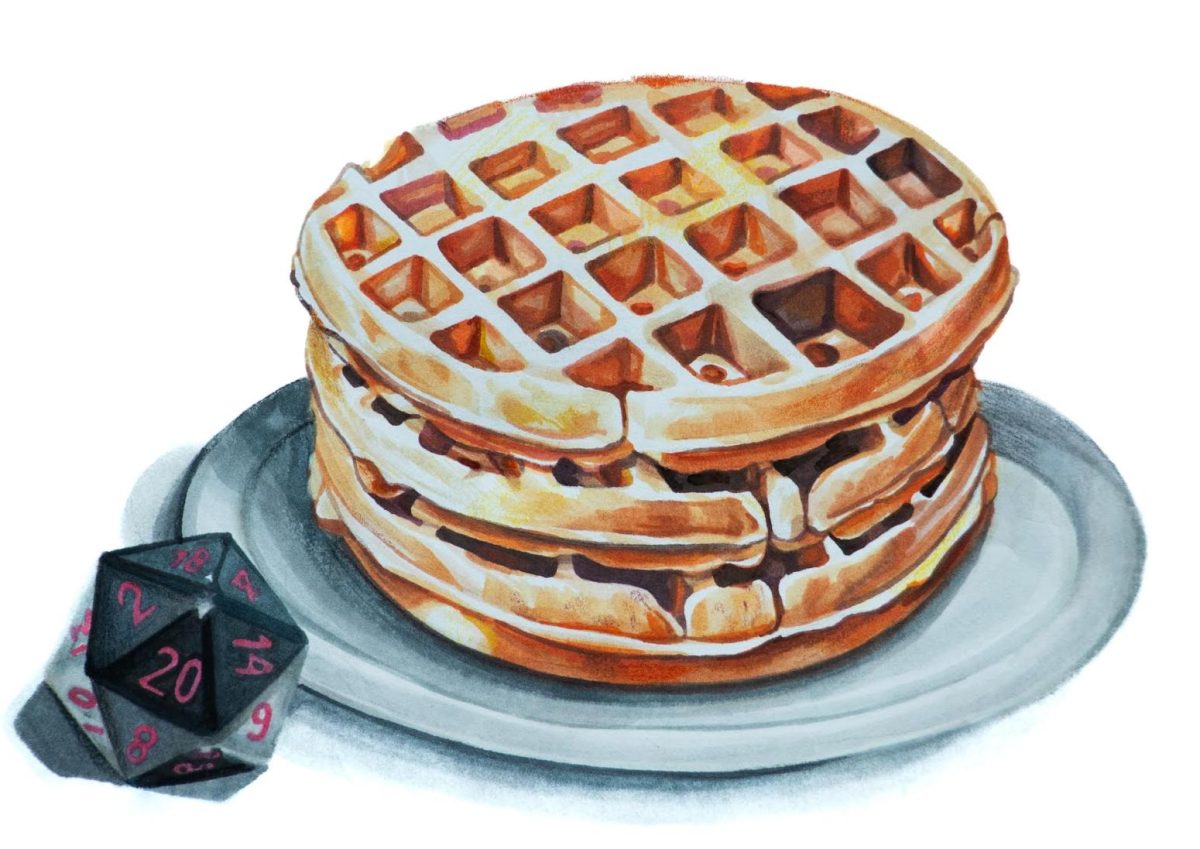
But like the last bite of a syrup-soaked stack of Eggos, all good things come to an end.
And while it seems as though the basement door is shut for good, the Stranger Things franchise isn’t entirely finished. Die-hard fans can look forward to the animated series Stranger Things: Tales of ‘85, arriving in 2026, and the Netflix documentary One Last Adventure: The Making of Stranger Things 5, which dropped Jan. 12.
20-sided die illustration by Raina Kim, News Co-Editor.






Sam Barrett • Jan 22, 2026 at 4:20 am
Well said! Us parents loved watching with our kids too, even though I had to push pause on many occasions and ask for an explanation as to what was going on. What a show!!
Stephanie Matheny • Jan 21, 2026 at 9:15 pm
You did such a great job encapsulating so much of what made this show special! I also loved reading about it from a teenagtrer’s perspective. Well done!
Stephanie Matheny • Jan 22, 2026 at 5:15 pm
*teenager’s
Jacquelyn • Jan 21, 2026 at 8:45 pm
So good, Charlotte!