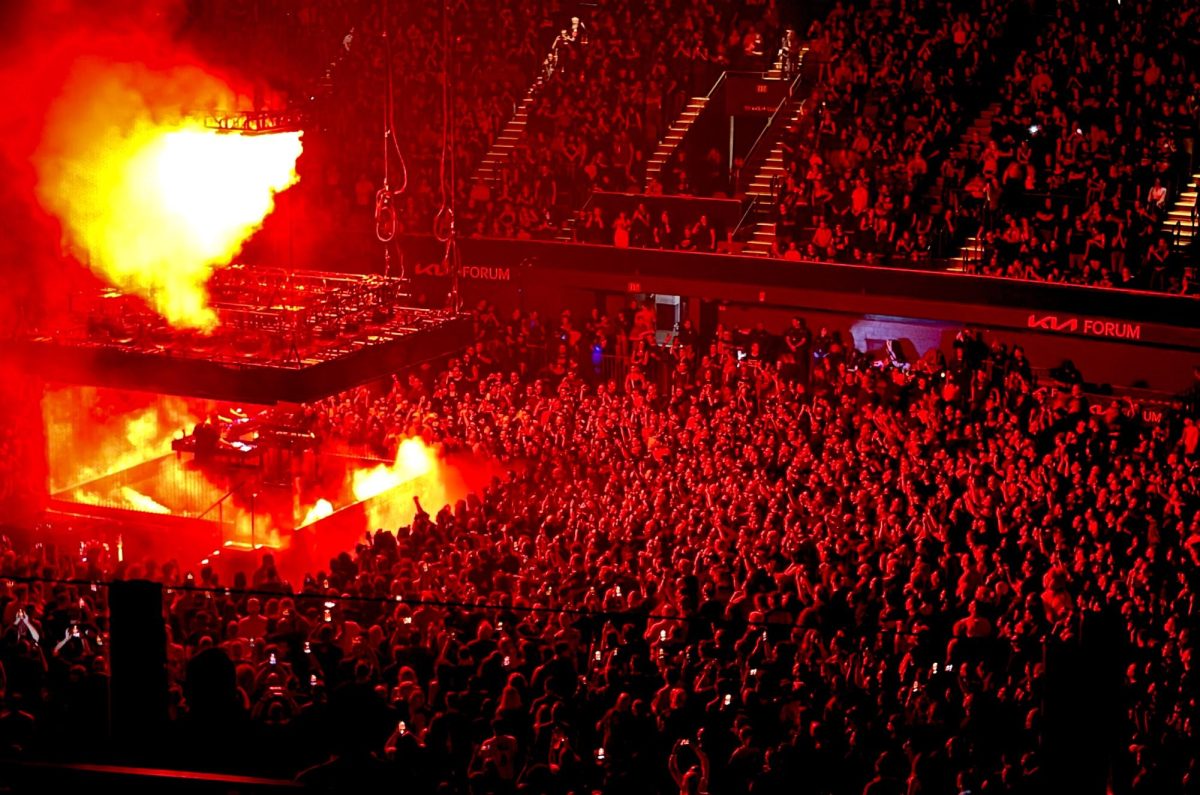

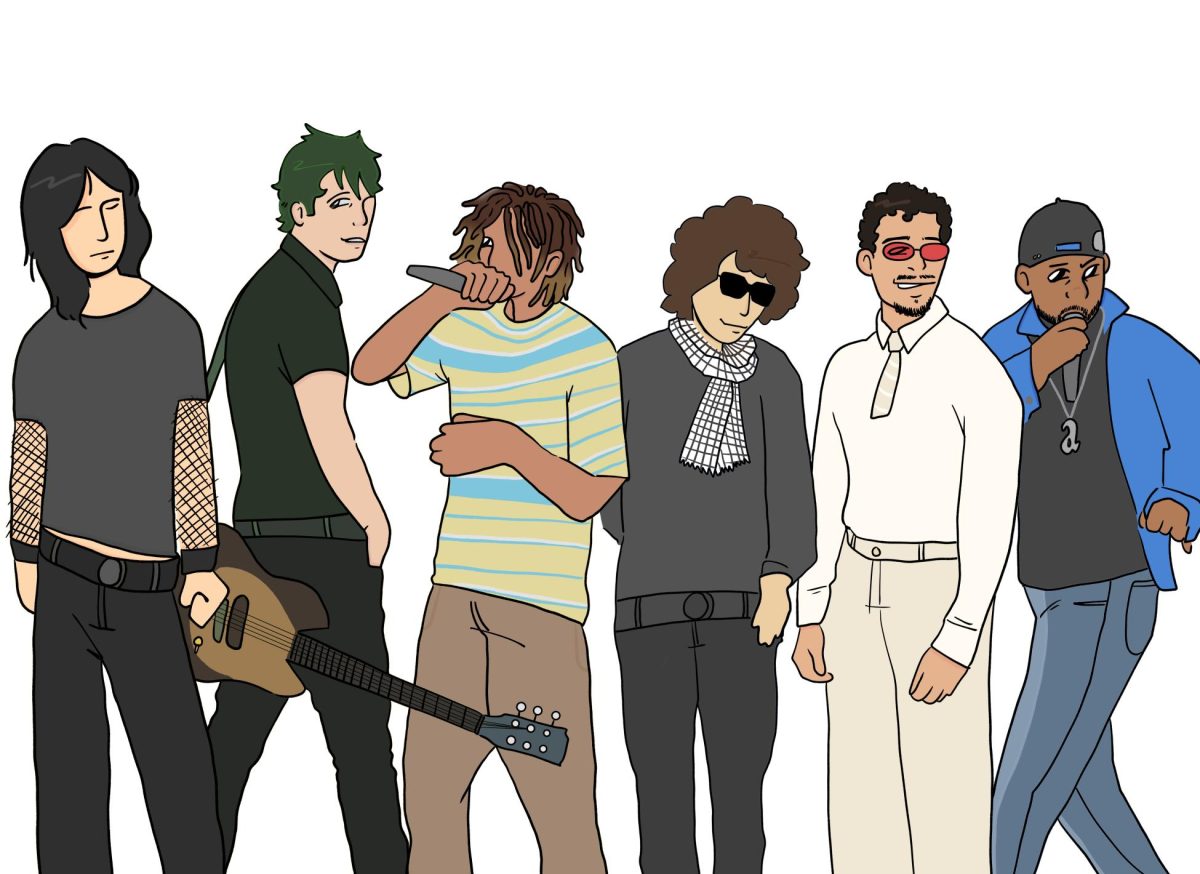
The speakers boom when the first chord hits and an electric guitar screams through the amp. Fists shoot into the air as Green Day’s lead singer, Billy Joe Armstrong, shouts into his microphone: “No Trump, no KKK, no fascist USA.” A crowd of thousands responds, an echo of defiance, of rebellion.
Green Day, founded in 1987 in the San Francisco Bay Area, fused punk rock angst with pop anthems of anarchy, is still one of the most politically-relevant and socially-aware artists today. Their 2004 song “American Idiot,” recently performed on one of the biggest concert stages in the world — the NFL’s Super Bowl in February — conveys their rejection of propaganda and xenophobia in lines like,
Don’t wanna be an American Idiot
One controlled by the media
Information age of hysteria
It’s calling out to idiot America.
Los Angeles’s Rage Against the Machine, created in 1991 by activist vocalist Zack de la Rocha, used their music, and enduring fame, as political weapons. Songs like “Bulls On Parade” fought against fascism and corporate greed, and the 1992 mega-hit “Killing in the Name” (currently at 1.2 billion plays on Spotify) blasted police brutality in the lines, “Some of those that work forces / Are the same that burn crosses.”
Nine Inch Nails debuted in 1989 with emotional vulnerability linked to bleakly dystopian narratives, questioning how far a government will go to stamp out dissent. In 2005’s With Teeth, lead singer Trent Reznor asks in “The Hand That Feeds” how long will we allow ourselves to be kicked around by authoritarians: “Will you bite the hand that feeds you? / Will you stay down on your knees?”
For these artists, music wasn’t a shortcut to fame and fortune, but rather a means to loudly challenge tyranny. Music, ultimately, is more than entertainment, it is a way to change hearts and minds without breaking bodies. (Unless you’re a fan of mosh pits, that is.)
But the music of revolution and rebellion has all but disappeared in the past two decades, the music charts dominated by polished pop artists like Britney Spears, Ed Sheeran and, more recently, Sabrina Carpenter and Taylor Swift.
The songs currently clogging The Billboard Hot 100 and being streamed millions of times on Spotify are fun to sing along with and dance to, but they’re also safe and complacent.
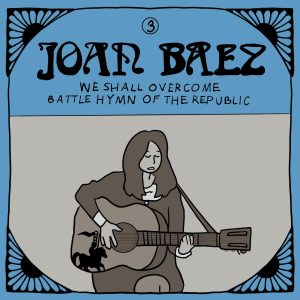
In the 1960s, artists like Bob Dylan and Joan Baez wrote songs that directly challenged racism in the United States and the war in Vietnam. Dylan’s “Blowin’ in the Wind” compelled listeners to question injustice. Baez used her voice and acoustic guitar to support equal rights, including her performance of “We Shall Overcome” at the Martin Luther King, Jr.-led March on Washington on Aug. 28, 1963.
In the ’60s, musicians were not afraid to challenge traditional social norms and gender roles, like Lesley Gore’s “You Don’t Own Me,” which rejected controlling relationships and asserted women’s independence.
Then in the 1970s, punk rock really went after the establishment, with imagery and lyrics that attacked oppression, discrimination, conformity, and government control. Punk rejected participation in monetized music and instead embraced unfiltered self expression.
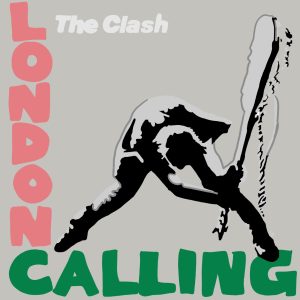
The Stooges denied protest folk and favored visceral confrontation in songs like “Search and Destroy.” The Clash’s “Know Your Rights” attacked authoritarian police states; and the Sex Pistols was all nihilism anti-status quo in classics like “Anarchy in the UK” and “God Save the Queen.”
Even in the pop-fueled ’80s, artists like U2 explored political themes through songs such as “Sunday Bloody Sunday,” a pacifistic cry against the continuous violence in Northern Ireland; and Bruce Springsteen’s hit “Born in the U.S.A.,” is scathing commentary on the terrible price of war.
Later, the decade gave us rap and hip-hop, bluntly confronting inequality, racism, and police brutality. Public Enemy’s album It Takes a Nation of Millions to Hold Us Back fused boisterous beats with biting lyrics that fought against social injustice, like in “Bring The Noise“:
Listen for lessons I’m saying inside music
That the critics are all blasting me for
They’ll never care for the brothers and sisters
Across the country has us up for the war.
Artists like Public Enemy, Dylan, and Springsteen used their turntables, guitars, and microphones, to protest and champion causes.
And their songs were hits.
But in the 21st century – a world still rife with conflict, oppression, and hate – artists have mostly abandoned politics in their music, choosing to remain neutral and ambiguous because money to shareholders matters more than calls to action. No one today, it seems, wants to fight the power.
In an interview with the New York Times, Reznor stated that music artists have the responsibility to “call out whatever needs to be called out,” but the most famous artists today neglect political topics because “they are more concerned about their brand, their demographic, and their career, and success.”
There are popular artists today who challenge today’s political agendas, such as Bad Bunny, winner of six Grammy Awards. The Puerto Rican artist has protested U.S immigration policies and the Trump administration and uses his platform (the artist has 109.4 million monthly listeners on Spotify) to advocate for marginalized communities.
Kendrick Lamar, the first rapper to win the Pulitzer Prize, unveils the systematic racism polluting our society as a whole. Since 2011, Lamar has been a defining voice of social injustice and continues to share his experiences of racial discrimination and police brutality.
But for the most part, the most popular voices in protest music are acts that formed in the ’80s, ’90s, and early-2000s.
With the introduction of streaming platforms like Spotify and Apple Music in the 2000s, a system that rewarded songs that generate massive replay value and now favor songs that bring broad appeal had surfaced. Now songs that address complex political issues often struggle to compete with safe-to-sing-along-to tracks by Swift, Carpenter, Olivia Rodrigo, and Bruno Mars.
In 2026, musical activists are a rarity and the rockers of the past — Green Day, Nine Inch Nails, de la Rocha — still carry the torch of revolution through their art.
“A lot of bands today are designing themselves to get a good review in hip blogs and that is probably the safest and most cowardly thing you can do as an artist,” Reznor said in The Guardian. “If you have to say something, then say it. Express yourself and break the rules.”
Art is resistance, and with the corporate monetization that tries to stamp out voices, protest music is more important than ever.
But to whom will the torch be passed?
Album homage art by Jess Vargas.