



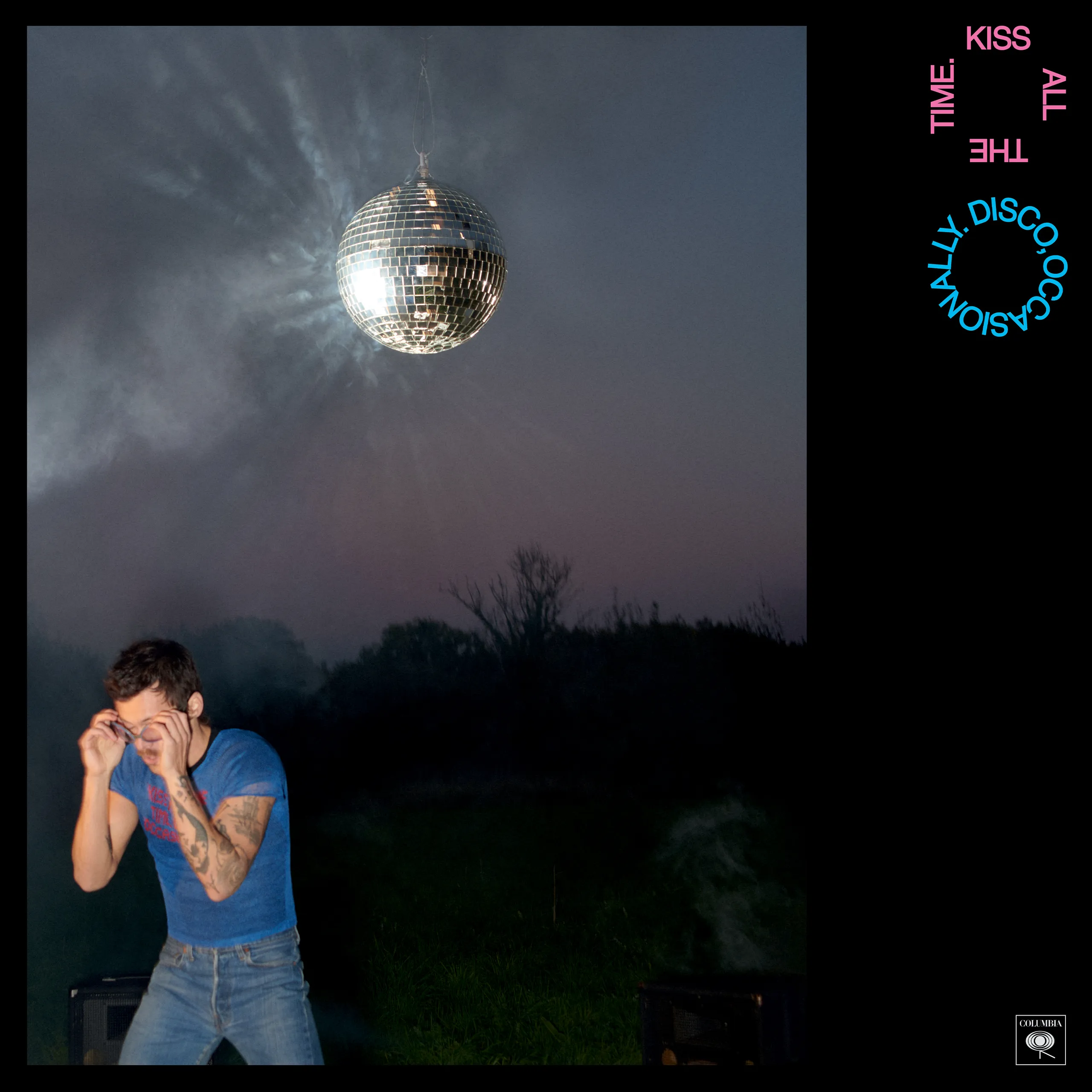
Many musicians build albums around a single theme. For instance, Olivia Rodrigo’s SOUR and Sombr’s I Barely Know Her each explore young love and breakups, while Taylor Swift’s The Life of a Showgirl explores the pop star’s life in the spotlight.
Harry Styles, however, has built an album around a bevy of themes related to contradictions: love and independence, nostalgia and growth, chaos and calm.
The 32-year old’s latest endeavor, Kiss All The Time. Disco, Occasionally (affectionately dubbed “KISSCO” by fans), which dropped March 6, explores these contradictions in a refreshing blend of upbeat electro-funk, pianos and violins, and poignant, revealing lyricism that make the album a career high-point for the British musician.
This fourth studio album by Styles delves into who he really is, peeling back the singer’s many layers — his movie star layer, his world-famous boy band layer, his gossip column-worthy love life layer — song by song.
Beneath these layers, Styles reveals who he is: an artist who doesn’t want to compromise himself in any way — whether it be in his career, relationships, or family.
His first three albums — Harry Styles (2017), Fine Line (2019), and Harry’s House (2022) — are less experimental and introspective, so KISSCO, his first solo release in four years, with its passion and honesty, is a welcome, and career-best, addition to his discography.
KISSCO opens with “Aperture,” which immediately sets a tone of disco-era partying with a synth-heavy, electronic sound produced by Kid Harpoon and Tyler Johnson (producers or co-producers on all 12 tracks). The song pulses with energy, and introduces the experimental vibe of the album while still maintaining the passionate lyricism the singer is known for. Lines like, “It’s best you know what you don’t / Aperture lets the light in,” evoke Styles’s nostalgia for past relationships, and set the tone, and high expectations, for the rest of the album.
One of the album’s most reflective moments occurs on the album’s second track, “American Girls.” More subdued than the first track, it begins with a hushed piano and warm vocals. The song has an emotional heft in its exploration of loneliness and frustration. The lyrics (“‘I’ve known you for ages,’ it’s all that I’ve heard / My friends are in love with American girls”) and melody (fueled, after the piano intro, by electric guitar and driving bass) combine to create a poignant song about compromise, choice, and self.
But not every experiment on Styles’s album hits. Songs like “Ready, Steady, Go!” feels overly produced, like what producers think fans want to hear, resulting in a too-polished pop beat that is obviously crafted to generate many millions of Spotify streams. The sheen sacrifices emotional depth, a disappointing deviation from Styles’s usually introspective and unique voice.
Similarly, “Season 2 Weight Loss” weighs down the album with too-aggressive techno beats and synth sounds. It’s a perfect song for a club’s dance floor, but is tonally out-of-place from the soulful sounds elsewhere on the album.
Despite those diversions into dance pop genericness, however, the album shines in the moments — and there are many of them — where Styles leans into the themes evocative of the artist himself, each one different, meaningful, layered.
Track six, “The Waiting Game,” combines romantic lyricism with a gentle guitar and analog sounds. It’s distinctly reminiscent of classic Harry Styles hits like “To Be So Lonely” and “Cherry.” “The Waiting Game” is vulnerable commentary on relationship cycles and self-reflection and highlights the musician’s ability to write about loneliness in a way that doesn’t feel like a massive drag, weighing the listener down in melancholy.
Later tracks, like “Coming Up Roses” and “Dance No More,” further showcase Styles’s, well, new style. “Dance No More,” in particular, is clearly influenced by ’70s disco, and brings a funky-fresh energy that feels less like observing a strobe-illuminated dance floor and more like being at the very center of its sweaty, bouncy energy.
But the true star of the album is track 11, “Paint by Numbers.” Ironically, given the album’s disco motif, the song is stripped-down and unpolished, a welcomingly raw divergence from the rest of the “occasionally, disco” album. The song is jarring in its simplicity — Styles and his acoustic guitar combined with hushed drums contrast the heavily-produced sounds of the rest of the album. The metaphor — “It’s a lifetime of painting by numbers / and watching the colors bleed” — captures the album’s central theme of compromise (or rather, at times, a lack of it). The song also parallels the emotional vulnerability of “Matilda” from his last album, Harry’s House, while leaning even further into introspection, making it one of (if not the) most memorable moments on the album.
Styles may spend the album pondering what to sacrifice in order to find balance, but the album proves that he really can do it all, merging electric musical experimentation with intimate storytelling, without losing himself along the way.







Jan Anderson • Mar 31, 2026 at 12:56 pm
Insightful. Styles should be flattered. Excellent writing.