

There was once a time when millions of basements, dens, and living rooms were aglow with the MTV logo on boxy TVs, and when a music video premiere like Michael Jackson’s “Thriller,” Madonna’s “Like a Virgin,” and anything by the Backstreet Boys, could shift the landscape of not just music culture, but popular culture.
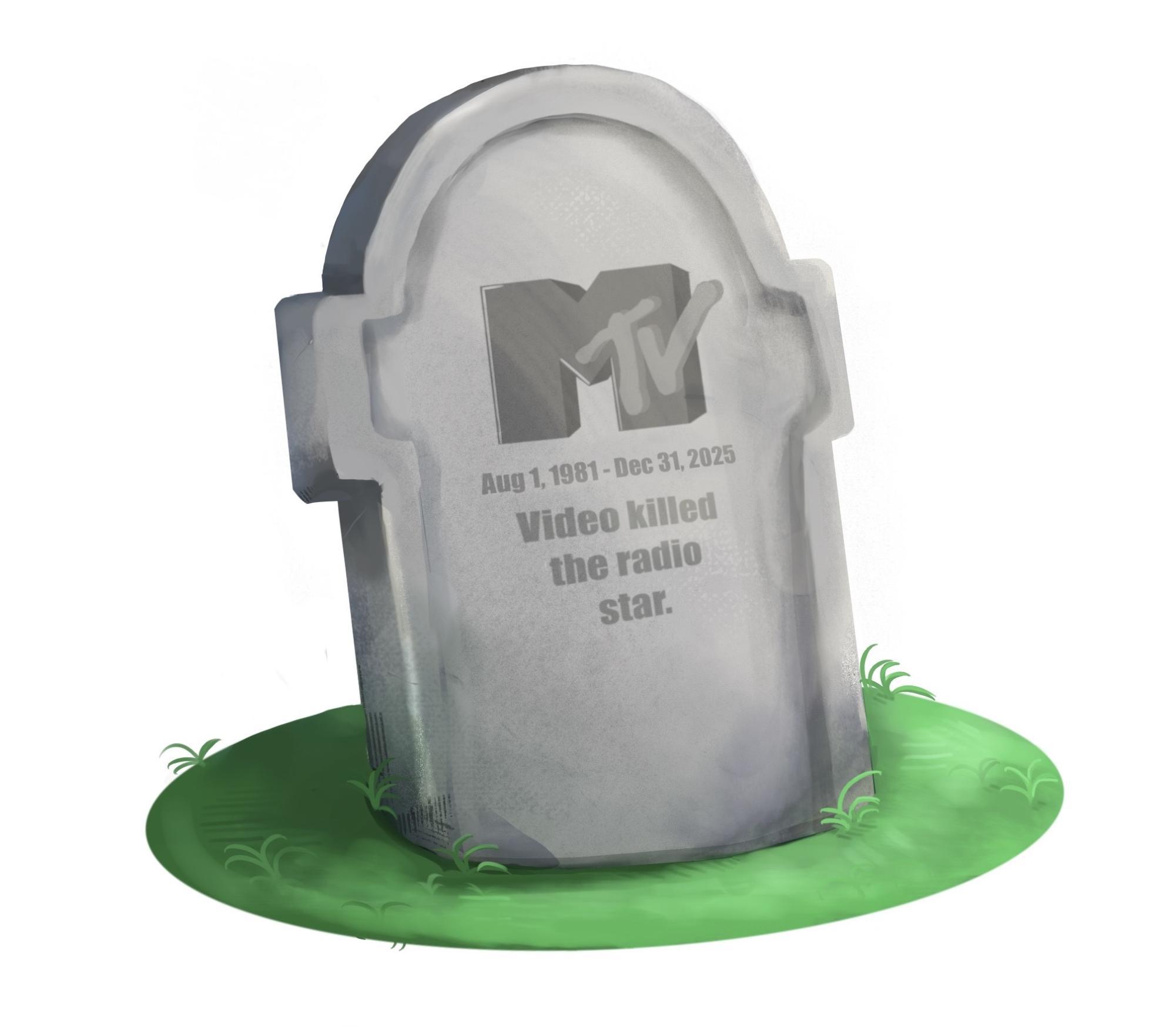
But with changing viewing habits of teens due to the rise of streaming (YouTube, especially) and social media like Instagram and TikTok, MTV announced last summer that it will shut down its music channels by Dec. 31, 2025.
Since its debut in 1981 with its first video, “Video Killed the Radio Star” by The Buggles, MTV brought music, artists, and youth culture into mainstream entertainment, 24 hours a day. But MTV wasn’t just documenting music culture, it was directing it.
English teacher Alex Koers was there from the beginning, catching the channel’s first video in his family’s Michigan living room. “So much of our style was influenced by MTV, from our haircuts, to our outfits, to our dance moves,” Koers said. “Literally every Saturday morning for me in high school was ‘Yo! MTV Raps,’ and every afternoon for many of my students in the early 2000s was Total Request Live.”
Video premiers were monoculture moments — events people planned evenings around, raced home for, or talked about for days after. That’s why Madonna writhing in a torn wedding dress, Michael Jackson being stalked by a pack of zombies, and Nirvana satirizing teen rebellion in the most chaotic of high-school gyms didn’t just entertain audiences, they defined an entire era.
“Everyone’s parents were shocked by the content on MTV,” Verronica Clements, AP Seminar teacher, said. “They said it was the end of civilized society.”
That era of controversy and culture-making, to the dismay of Gen Xers worldwide, is ending this month.
MTV’s decline reflects the broader shift in the way audiences consume music, TV, and film. Algorithm-driven apps like YouTube and Spotify changed the way we discover new music and artists, so tuning in to MTV at a specific time to watch music videos became obsolete. Further contributing to MTV’s demise was their prioritizing cheaper, higher-rated reality programing and digital content, leading to layoffs and an eventual retreat for the network’s original mission: “music television.”
The channel’s impact extended beyond music, however. The “faces” of the channel, its on-air personalities, or “VJs,” inspired early parasocial relationships with viewers and helped define the network as a cultural gateway for young audiences. Figures like Martha Quinn, Nina Blackwood, Kurt Loder, and Carson Daly weren’t just hosts, but sellers of taste, delivering Prince, Aaliyah, No Doubt, Green Day, Run-DMC, and others onto the TV screens of Gen X teens.
“MTV was the cool channel,” Gil Rotblum, AP European History teacher, said. He recalls how the network shaped his enjoyment of music and pop culture, and inspired defining moments in his childhood, like watching Michael Jackson’s 14-minute “Thriller” video with his sister.
MTV was also groundbreaking as a platform that challenged traditional gender roles and sexuality in mainstream media. At a time when rigid definitions of masculinity (Arnold Schwarzenegger in The Terminator, Sylvester Stallone in Rambo and Rocky), dominated pop culture, the network amplified artists like Prince, Boy George, George Michael, and Queen who either blurred or rejected those boundaries altogether. MTV also provided crucial visibility for LGBTQ+ artists, helping to normalize differences for a generation of viewers at a time when the gay community was being ravaged by the AIDS epidemic. (That MTV championed gay artists is one of its most important legacies.)
But that version didn’t last.
By the early 2000s, MTV was at peak viewership during the Total Request Live era, when Daly hosted daily countdowns that made watching music television a live, communal experience. Artists like the Backstreet Boys and NSYNC, and Christina Aguilera and Britney Spears, dominated the charts, while fans rushed home from school to vote for their favorite videos. TRL turned the network into a hub of youth culture, creating celebrity moments, fan rivalries, and real time connection between artists and their audiences that was unpredictable in pop music.
“MTV was appointment television for me,” Bryson Burns, assistant principal, said. “I wasn’t glued to it all day, but I always made sure I was home for Total Request Live. It was where I discovered new music, different genres, and watched music videos evolve, so seeing it end now feels bittersweet — like the end of an era.”
Yet, despite its cultural dominance, the network faced mounting financial pressures. Music videos were expensive to produce and functioned largely as promotional content, while reality shows were far cheaper and easier to monetize. Programs like the ground-breaking The Real World, which debuted in 1992 and ran for more than 30 seasons, and Laguna Beach: The Real Orange County, delivered consistent ratings at a fraction of the cost.
It was a business decision, one that ultimately cost MTV its identity. After The Hills, Teen Mom, and eventually Ridiculousness (which aired a staggering 1689 episodes from 2011 to October 2025) dominated the schedule, MTV had abandoned music altogether.
But the biggest catalyst in MTVs demise: YouTube.
When the world suddenly had instant, 24/7 access to practically every music video ever made, the need for MTV evaporated. People no longer had to wait for a favorite artist to appear at 11 p.m. on an episode of Headbanger’s Ball or during TRL, and long gone were the days of racing home for video premiers.
Add in Spotify (and its 713 million users) and TikTok (1.5 billion daily users) to launch artists into mainstream success, and MTV’s role as cultural tastemaker collapsed. It didn’t matter what they aired, the audience was already elsewhere.
At end of this month, MTV — the channel that launched Beyonce’s solo career, introduced us to Nine Inch Nails, brought Metallica (and its BOHS alumnus lead singer James Hetfield) to the masses, popularized entire genres, and turned music videos into global events — will shut down its music channels in the U.S. and across Europe, Latin America, Asia and Australia.
For some, like Burns, Koers, Rotblum, and the millions of others who came of age during MTVs height of popularity, it was a place to experience new music with family, learn new dance moves, adopt a new style, or simply to feel connected to others also watching around the world in the glow of their TVs.