


Quality fashion for teens has become a luxury locked behind hefty price tags, with trips to the Brea Mall and Fashion Island strictly for window shopping and disappointment.
This makes looking put-together for school and weekends while staying on budget feel impossible.
Still, there is an alternative, and sustainable, option available right here in North Orange County: thrifting.
Thrifting is the act of buying second-hand clothes, decor, or accessories, often at discounted prices. And, despite what TikTok might suggest, you don’t need a “thrifting aesthetic” or the skills of a professional bargain-hunter to get started. All you need is some guidance and a lot of patience.
The experience, at first, can feel overwhelming – salespeople, aisles packed with fellow bargain-finders and treasure-hunters, racks crammed with garments, seemingly endless bins to sort through, unpredictable inventory. Those feelings of anxiety will ebb in no time.
Shelly Weiseth, Biology teacher and veteran thrifter, advises, “Don’t worry if you make mistakes. Listen to your gut and go often.”
Despite its challenges, the rewards – unique and affordable attire with reliable quality — make the process worthwhile.
“Thrifting allows me to find styles and fashion that wouldn’t be found in stores now,” Cadriel Ta (‘28), experienced thrifter, said. “I like saving money and getting nice clothes.”
Pre-Game Rituals: Prepare Like a Pro
Before even leaving the home, set yourself up for shopping success by doing the following:
- Eat, for both energy and for saving money (we’re on a budget, after all).
- Save a Pinterest inspiration board to your phone for reference, including the looks you’re seeking.
- Wear form-fitting and layerable clothes since some stores do not have fitting rooms, and you may need to try on pieces over what you are wearing.
- Fill your water bottle.
- Pack a small bottle of hand sanitizer.
- Bring cash, a credit card, and payment apps like Venmo or Zelle. Some vendors only accept hard currency, and some only accept cash apps and cards.
- Map out your must-visit destinations, which will save you time, and alleviate a lot of stress.
Location, Location, Location
Fullerton alone has 15 thrift stores. The Wildcat recommends making your first stop Mustard Market, located at 415 South Harbor Blvd., just half a mile south from downtown. Venturing north, by foot or by car, and you’ll stumble upon George’s Antiques, the Salvation Army, Buffalo Exchange, and independent resellers like The Collective and The Brick Basement.
While traditional thrift stores reward patience and persistence, some shoppers prefer curated spaces that streamline the search.
“I go to Fullerton’s resale stores like The Collective because you don’t have to dig for items when everything is pre-picked,” Sofia Rodriguez (’26), Wildcat Co-Editor-in-Chief, said.
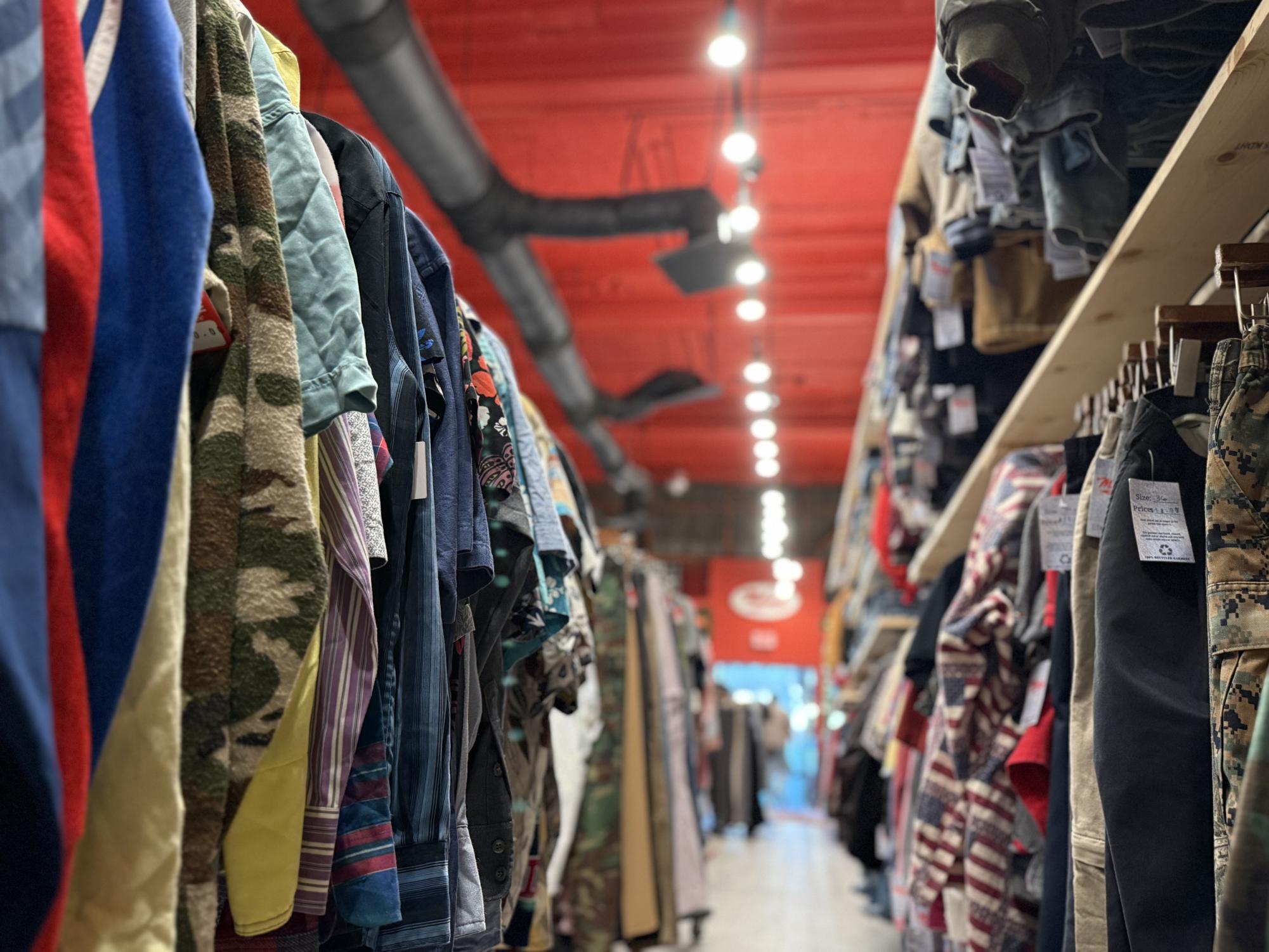
Just 12 miles away, Whittier also has multiple thrifting hotspots like Melrose Vintage (pictured) and URM Thrift & Boutique, while neighboring La Habra has the worthwhile PTA Thrift Shop.
A bit further away (but well worth the drive) are Anaheim Marketplace (1440 South Anaheim Blvd., Anaheim) and the Santa Fe Springs Swap Meet (13963 Alondra Blvd, Santa Fe Springs), both of which feature hundreds of vendors with tables and racks hiding possible gems.
For the adventurous, a 40-mile drive west to Los Angeles reveals the famous ThriftCon (tickets required) and Melrose Avenue’s Fairfax District. A walk down Melrose uncovers rows of thrift stores such as Wasteland and American Vintage, while ThriftCon presents hundreds of vendors, making L.A. the epicenter of second-hand shopping.
But most accessible — right here in Brea’s neighborhoods, in fact — are garage sales, yard sales, and estate sales. Those neon poster boards lining sidewalks and stapled to telephone poles are often ignored as visual white noise, yet they can lead to cheap finds and high-quality vintage pieces.
Thriftflation
While many thrift stores offer wide selections, not every stop is created equal – especially as thrifting shifts from a local weekend pastime to a mainstream trend due to online resellers like Depop, eBay, Grailed, and Etsy.
The popularity of all things vintage means resale brick-and-mortar shops have raised their prices — low supply plus high demand equals pricey items. But for many shoppers, the appeal and justification of the markups lies in the fun of discovery; being able to handle the garments to assess their quality; being able to actually try on the finds; and the labor of sorting, sourcing, and curating has already been done by the reseller.
Overconsumption Conundrum
And always keep in mind that not every low-priced garment that catches your eye is a good buy. Overconsumption — “the excessive use of resources, goods, and services, leading to detrimental environmental, social, and psychological effects” — can be avoided simply by having specific wardrobe goals…and a conscience.
That means…
…Browse With Intention (and a Playlist)
Put the headphones on and commit to hours of patient browsing because rushing means potentially missing the best finds.
“Sometimes you have to be creative in the moment and question: ‘Could this work in my closet, or not?’” Sofia Tapia-Guillen (‘27), a DIY and thrifting enthusiast, said.
Scanning racks with intention can completely transform the experience. Instead of searching item by item, focus on key indicators of quality:
- Color. Watch for overly-bright neons or heavily faded tones. Older brands often use muted or jewel tones that age better than today’s mass-produced hues.
- Fabric. Specific materials age better than others. Skip the 90% polyester garments by either feeling the fabrics or checking the tags for 100% cotton or cashmere gems. (You’ll eventually learn how to identify quality just by touch.) Vintage tees, for instance, are usually much sturdier and heavier than modern tees.
- Tag design. Familiar brand tags can signal durability and age. Older labels often differ in font, stitching, and material, making them useful indicators when distinguishing vintage from modern pieces.
- Stitching. Tight, even stitching and sturdy hardware indicate that the piece was made with care and designed to last. Modern garments often feature fraying stitching and flimsy fabric.
- Silhouettes. Focusing on the form of the piece creates personal style and could accentuate your proportions, allowing you to notice clothes with similar fittings and structure.
- Construction. Often, how a garment is crafted determines whether it will be a coveted find. Look closely at buttons, seams, linings, hems, and zippers. If they’re glued on, fraying, or broken, leave them on the rack.
Over time, your eyes and hands (and even nose) will learn to spot the subtle markers of quality garments.
But the most valuable trait of a successful thrifter is patience. Some of the best finds are buried deep in bins or hidden behind jam-packed racks – missed designer shoes, genuine leather jackets, or vintage denim overlooked by hurried shoppers. Taking the time to search carefully increases the likelihood of uncovering high-quality pieces at a fraction of their original cost.
Red Flags and Hard Nos
Repeat after me: Not everything is worth thrifting.
Hygiene and your health matter. Personal items like socks, swimsuits, and undergarments, and makeup and skincare products, are all automatic no-gos, no matter how “new” they look.
Although shelves packed with items can be tempting, always inspect pieces carefully. Some stores don’t sort, clean, or wash their inventory. Carry a small bottle of hand sanitizer because thrifting can be a very dirty endeavor.
Take it Off (the Hanger)
Fit plays a major role in thrifting. Clothing that looks unremarkable on a hanger can be stunning once worn. If fitting rooms aren’t available, simple techniques, like holding garments up to your body or checking proportions, can help determine potential.
For pants, a common trick is using your forearm to measure the waistband. For many people, the length of their forearm to their knuckle roughly matches their hip width, making it a quick and reliable sizing guide.
Staying flexible with size labels often leads to the best discoveries as well. Older garments follow different sizing standards, so focusing on structure and fit rather than the number on the tag opens the door to a more authentic style.
The Post-Thrift Reset
Once you’ve accumulated a haul, wash everything thoroughly. Then wash it again. A deep soak followed by handwashing is ideal, but two to three cycles in the washer will also suffice. For especially grimy items, such as jewelry, a more aggressive scrub may be necessary.
Many thrifted items require small repairs, such as sewing on a loose button or trimming stray threads. These small adjustments often breathe new life into garments that were nearly overlooked.
⋅⋅⋅
The media often portrays thrifting as a battlefield with competitive thrifters, toxic resellers, and unrealistic expectations constantly constructed. However, with the right information and hands-on experience, vintage hunting becomes a fun and fashionable exercise in strategy, shopping savvy, and closets filled with entirely new looks.