



‘Music, Passion, Excellence’: Adrian Sanchez (’24) and the World Famous Sonic Boom of the South Marching Band

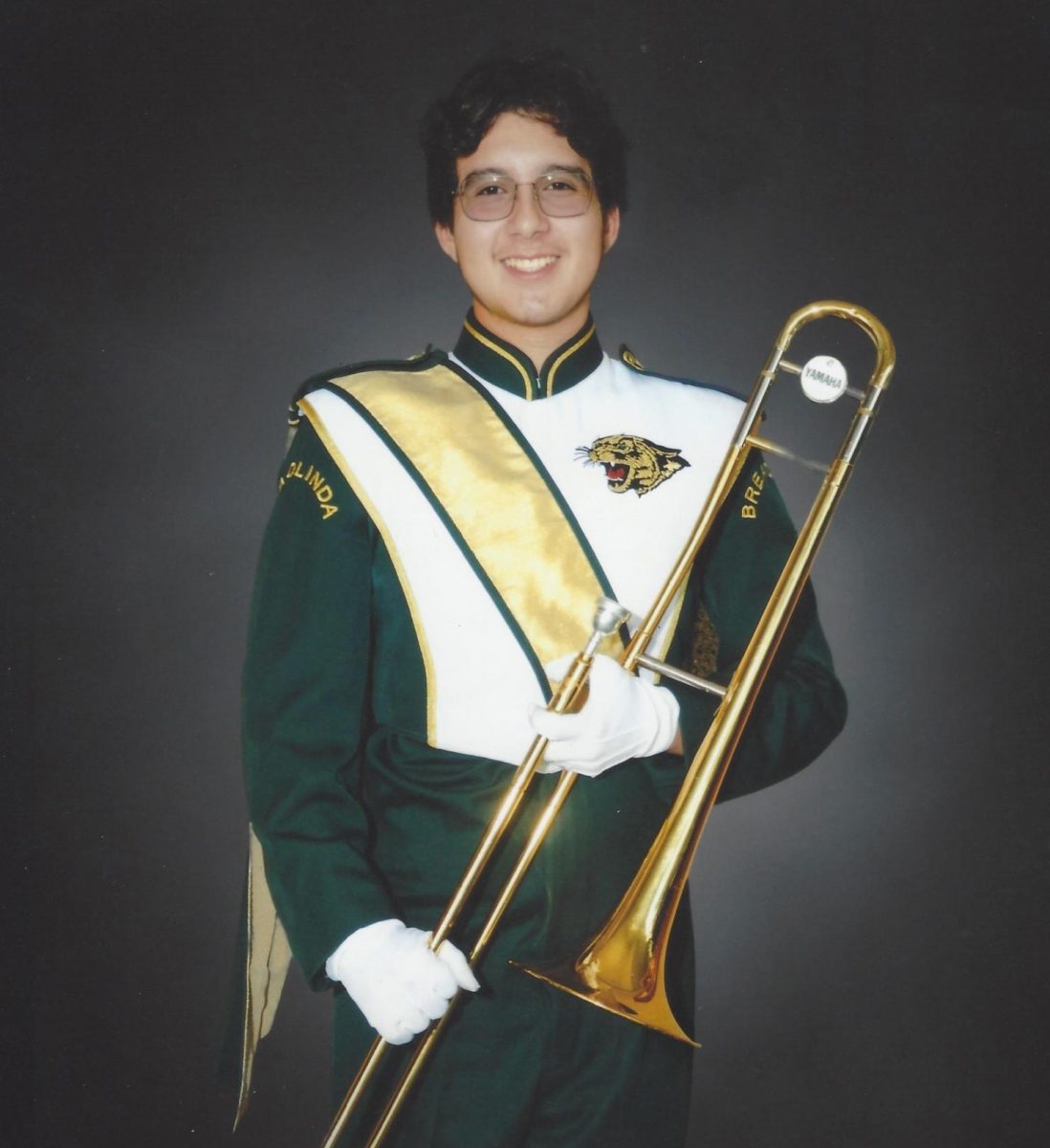
Sanchez’s journey from the hills of north Orange County to the heart of the South, Jackson, Mississippi, began in fifth grade at Mariposa Elementary School when he first picked up a trombone under the instruction of Ryan Hallum, former band teacher for Brea Olinda Unified elementary schools.
Later, it was in BOHS’s instrumental program and WEC, and under the tutelage of band director James Charrette, that Sanchez’s ambitions marched into focus.
As a freshman, Sanchez absorbed the fundamentals of marching band: synchronized posture, standardized playing position, and memorizing the tunes so they become muscle memory. Over time, those basics evolved into something more — a desire to teach, mentor, and guide young musicians.
“High school band absolutely shaped the way in which I viewed how a career in music could develop,” Sanchez said. “It was [in WEC] that I wished to become an educator, rather than just a performer.”
That epiphany led him into a leadership role his senior year. Appointed field captain of Brea Olinda Marching Band, Sanchez was responsible for instructing underclassmen in marching technique, ensemble discipline, and performance standards. The role was his first experience as an educator, and it solidified his passion for mentorship.
“His role as field captain captured the energy of motivation and influenced the younger band members,” Charrette said. “I remember Adrian not only for his skill, but for the determination he brought to the ensemble every day.”
While the WEC is most visible at Friday night football games and California State Band Championships (CSBC) competitions, Sanchez’s most meaningful moments happened behind the scenes — teaching younger musicians, correcting technique, and helping others find confidence through music. Those experiences compelled him to seek a college program where leadership, discipline, and tradition are core values.
Jackson State University was exactly what he was looking for.
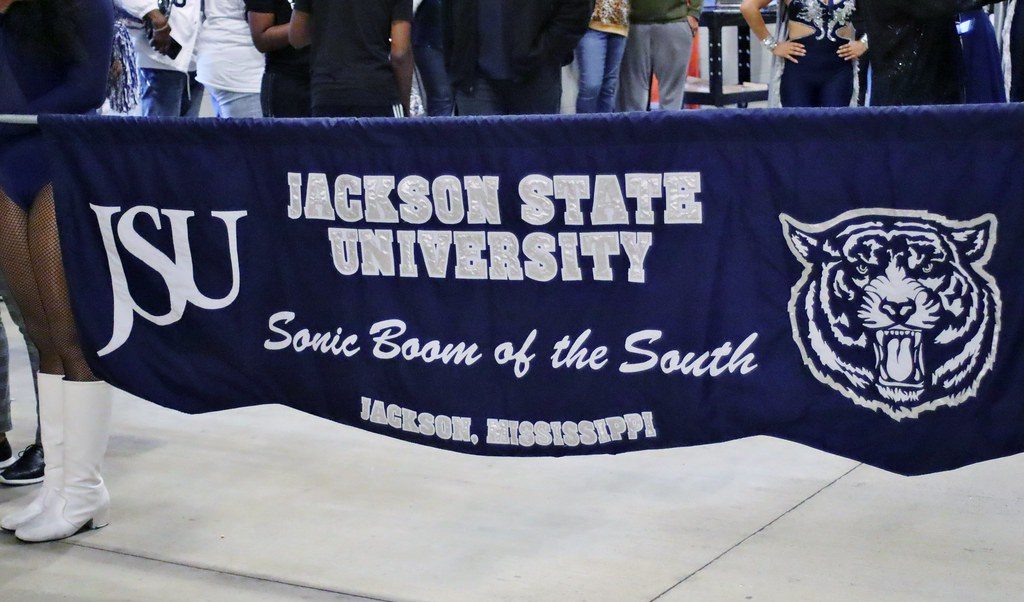
For Sanchez, choosing JSU meant stepping outside the familiarity of Southern California where he was born and raised. He was drawn to the South not only for its renowned marching band culture at the region’s historically Black colleges and universities (HBCUs), but for the opportunity to immerse himself in a region where music, history, and community are deeply entwined.
More than a change in zip code, the move from Brea to Jackson introduced a bevy of changes, from campus life, to the cuisine, to the climate.
According to Sanchez, student life at JSU is very active, with students gathering at the Student Center and the Gibbs-Green Memorial Plaza. While Sanchez’s demanding band schedule — up to six hours a day during football season — limits his ability to socialize as much as he’d like, he remains connected to campus life through his peers and bandmates.
“Its hard to talk about my college life at Jackson State without talking about band, as it’s such an integral part of my schedule, and the reason why I attended [JSU],” Sanchez said. “My friends outside of band always tell me how fun the events are and how eventful campus life is.”
Mississippi also introduced Sanchez to cultural differences — some subtle, some profound — between the two states.
One of the major differences between California and Mississippi, according to Sanchez, is “the heat.”
“Here,” Sanchez said, “the heat sticks to you.” Mississippi is the fourth most humid state in the U.S.
Sanchez also had to adapt to the dialects and accents of the South. “One of the more apparent differences I noticed my first time in Jackson were the accents,” Sanchez said. “If you don’t try to get used to how people talk in the South, you’ll have a hard time understanding what people are saying, but once you get the hang of it, it also feels like you understood it the whole time.”
Food, too, has been a defining part of his experience. “I love the food here,” Sanchez said. His favorites are cafeteria staples “mashed potatoes, mac and cheese, grits, hush puppies, and fried chicken.”
Along with his desire to step far outside the Brea Bubble and be a part of Sonic Boom’s national reputation, Sanchez chose JSU to learn music, education, and leadership at an HBCU.

But to Sanchez, more important than the recognition is the respect he’s earned from his marching band peers and the Sonic Boom’s directors. He credits the upperclass members for modeling professionalism and leadership, qualities he once embodied at home in Brea.
“There have been so many upperclassmen that inspire me,” Sanchez said. “Getting to know Desi Jenkins has allowed me to truly see the amount that student leaders put into the band program.”
Jenkins, a drum major for Sonic Boom of the South, said, “I have seen Adrian transition into a young man…he’s become confident and very certain of his ability to do anything he sets his mind to.” Jenkins also noted Sanchez’s leadership attributes: “He watched and learned, and when he was taught he wouldn’t stop until he got it mastered.”
“He has amazing leadership skills,” fellow Sonic Boom trombone player, Aveary Washington, said. “He’s a great player, marcher, and overall great person [and] serves as one of the example bandsmen in our section.”
Trombone player Salvador del Muro also acknowledged Sanchez’s discipline and leadership. “No matter what, [Adrian’s] always doing the right thing, whether that’s marching the right way, playing the correct way, or staying locked in on the details,” del Muro said. “People notice how he prepares, how he handles pressure, and how he supports others, and that naturally raises the standard for everyone around him.”
That esprit de corps — the commitment to working honorably and collectively — defines Sonic Boom culture. Life as a member of an elite college marching land is rigorous, even outside of game day. Sanchez’s rehearsals start at 4:30 p.m. and end at 11 p.m. Band members stretch and run before brass and percussion drills begin. They memorize complex marching formations, rehearse music, and refine choreography until every step is precise, every note is crisp.
For Sanchez, this daily “grind,” as del Muro calls it, has pushed him to grow beyond music, shaping his character and reinforcing his desire to be an educator. He’s learned “patience, resilience, and how to motivate others” — skills not learned in classrooms, but in daily demand on fields lined with hundreds of high-performing musicians.
Although Sanchez now studies in Mississippi, his impact reaches back to Brea. Tyler Park (‘27), who witnessed Sanchez’s journey in WEC, said Sanchez has influenced his own post-high school plans.
“After finding out he’s still doing marching band after high school, it made me rethink quitting band after high school and consider doing it in college,” Park said. “I found it hard to think what my life would be if I stopped doing band after high school and [Adrian] helped to make band after high school a possibility for me.”
Beyond leadership, Sanchez’s growth at JSU has been shaped by the friendships made during long rehearsals and mutual accountability. “Sibling” trombone player Washington said, “One quality Adrian has that I always appreciate is his ability to listen and relate to almost anything. I can talk to him about my childhood and he can listen to me and almost immediately find a common ground for us to relate, despite our cultural and racial differences.”
As Sanchez looks ahead, his ambitions remain grounded in growth, discipline, and purpose. He plans to complete his music degree at JSU before returning to California to earn his teaching credential and graduate degree, bringing with him the lessons learned on Southern football fields and within an HBCU band culture defined by passion and excellence.
That growth has been most visible to those who entered the journey alongside him. “I’ve seen Adrian grow a lot mentally and emotionally,” del Muro said. “We came into college and band together and went through band camp side by side, and over time he’s become more disciplined, confident, and driven. He takes things more seriously now and carries himself like someone who understands his purpose and responsibility.”
Your donation supports the student journalists at Brea Olinda High School! The contribution will help us purchase equipment, upgrade technology, and cover our annual website hosting costs.








Ramon Jimenez • Jan 20, 2026 at 8:35 pm
“I’m proud of you. my big boy. Keep doing the best you can. For sure, you will succeed.”
Salvador • Jan 19, 2026 at 11:03 am
My brother Adrian Sanchez yessir
Naida Jimenez • Jan 19, 2026 at 11:02 am
So proud of you, Adrian! Can’t wait to see all that you accomplish.