


“Hard launch,” “soft launch,” and “situationship” are just a few of the dating buzzwords that frequently appear on teenager’s For You Pages and Instagram feeds.
The “three-month rule,” in particular, is a perfect example of the TikTok-ification of teenage love. (According to our FYPs, three months is when people show their “true colors.”)
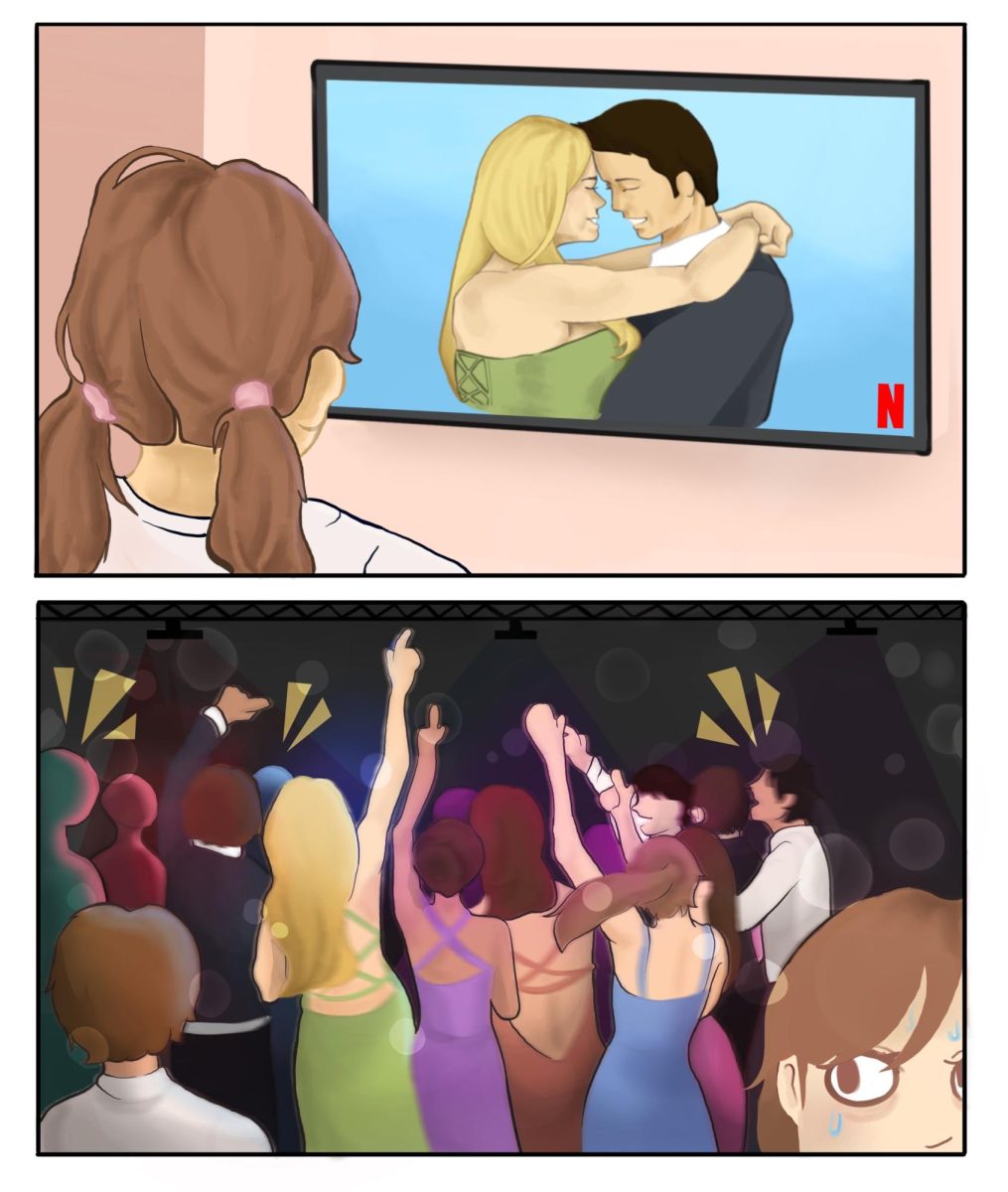
These social media-popularized labels thus turn Valentine’s Day into more than what should be a straight-forward day of honest proclamations of love; they turn the day into a presentation, a performance.
While Valentine’s Day has always been about showing affection (like gifting flowers or writing a love letter), it has not always been about showing off your love. What was once an ancient Roman fertility festival and celebration of spring evolved into an annual occasion for romance thanks to the poets and artists of the Middle Ages. Since then, the holiday has become a celebration of romantic love, friendship, and family.

Consider the performative “soft launch,” which is not about affection or “true love” at all, but instead about optics. Soft launches are strategic posts to let followers know that you’re “cuffed,” but humble about it.
Then there’s the “hard launch,” the public announcement of a new relationship, usually featuring hand-holding or a cute selfie.
While these terms aren’t inherently bad — language evolves and slang is fun — the problem starts when the labels and performance matter more than the relationship itself.
The language we use shapes what we expect — when love is framed by something we launch, upgrade, or define, it begins to resemble a trend, not a genuine connection with someone we care about.
Somewhere between scrolling through TikTok and posting a curated Instagram dump, relationships stopped being something we felt and became chronically labeled.
Social media obviously didn’t invent complicated teen relationships, but it has gamified them.
It’s about proving to others what you have and that you have it — doing some huge (Instagram-postable) gesture.
It’s no longer just talking, it’s a “situationship.”
It’s not just posting your partner, it’s “hard launching.”
It’s not just going through a rough patch, it’s hitting the “three-month-mark.”

The phrases are funny and clever — they make awkward stages of dating easier to explain. But they also turn normal relationship ups-and-downs into checkpoints and categories. Instead of asking ourselves, How do I feel? we start asking, What stage is this?
It’s teen love as content, not about whether our partner makes us happy, it’s about whether our relationship is aesthetic enough to post on our Stories.
And it’s language that fuels the performative nature of teen relationships. Phrases like “princess treatment,” “bare minimum,” or “if he wanted to, he would” define what effort is supposed to look like. They flatten complicated emotions into quotable one-liners.
Dramatic teen love is as old as time, but social media has convoluted the vocabulary we use to describe it, thus shifting our focus away from what really matters: a genuine connection.